

By M. Baballie Sie
November 17, 2026
Yet sometimes, amid the tragedy, a story emerges so profoundly human that it reminds us why conservation is never simply about protecting wildlife; it is about understanding the complex relationship between people and nature.
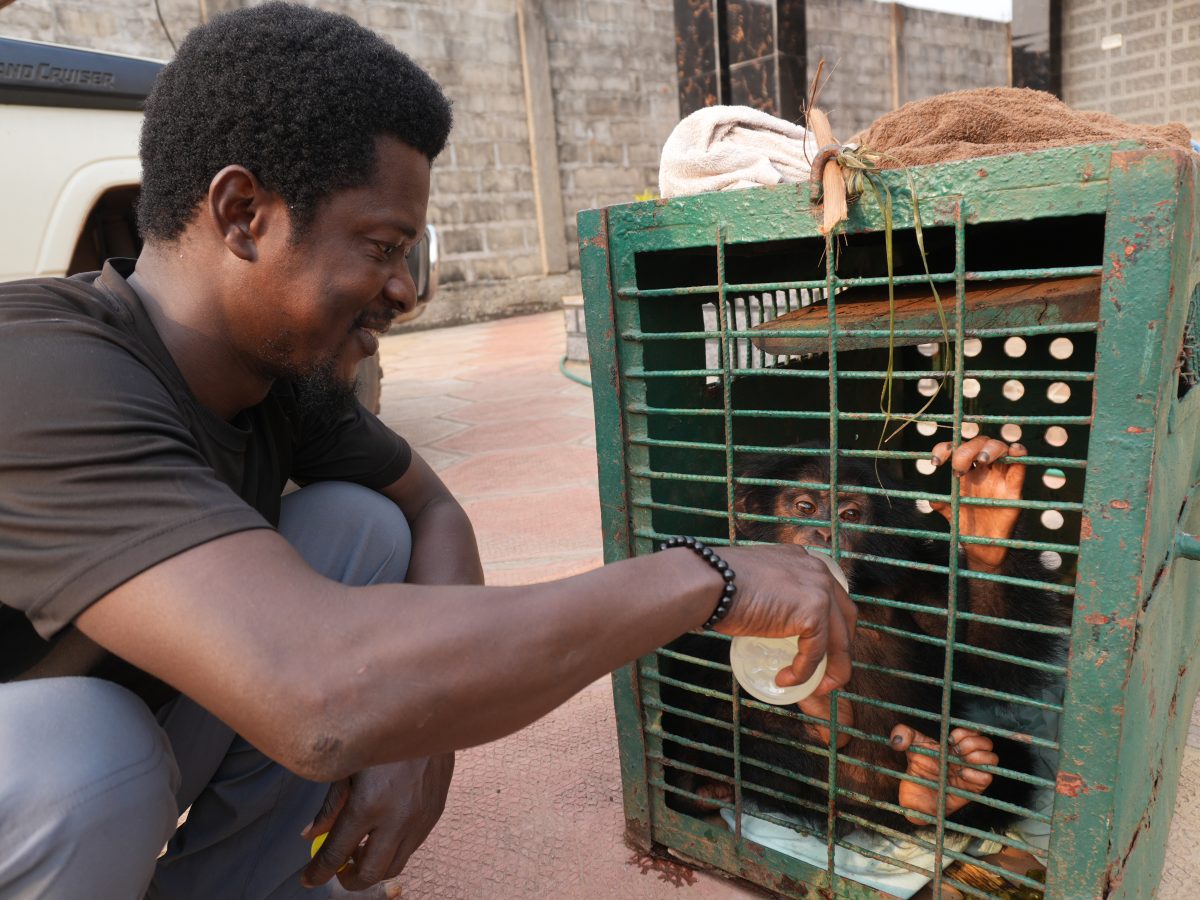
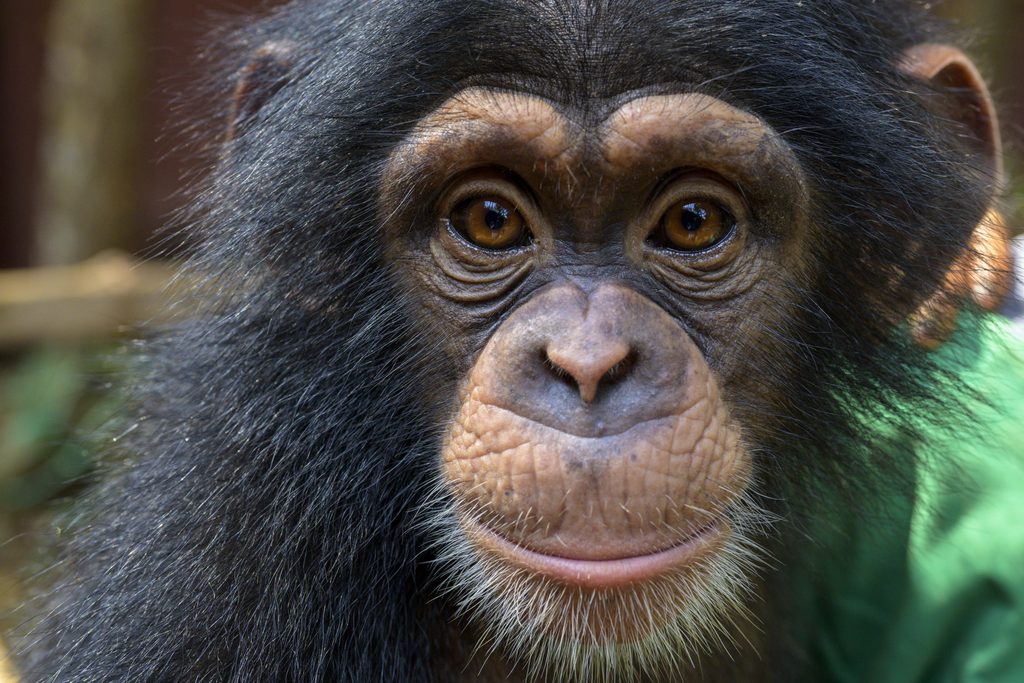
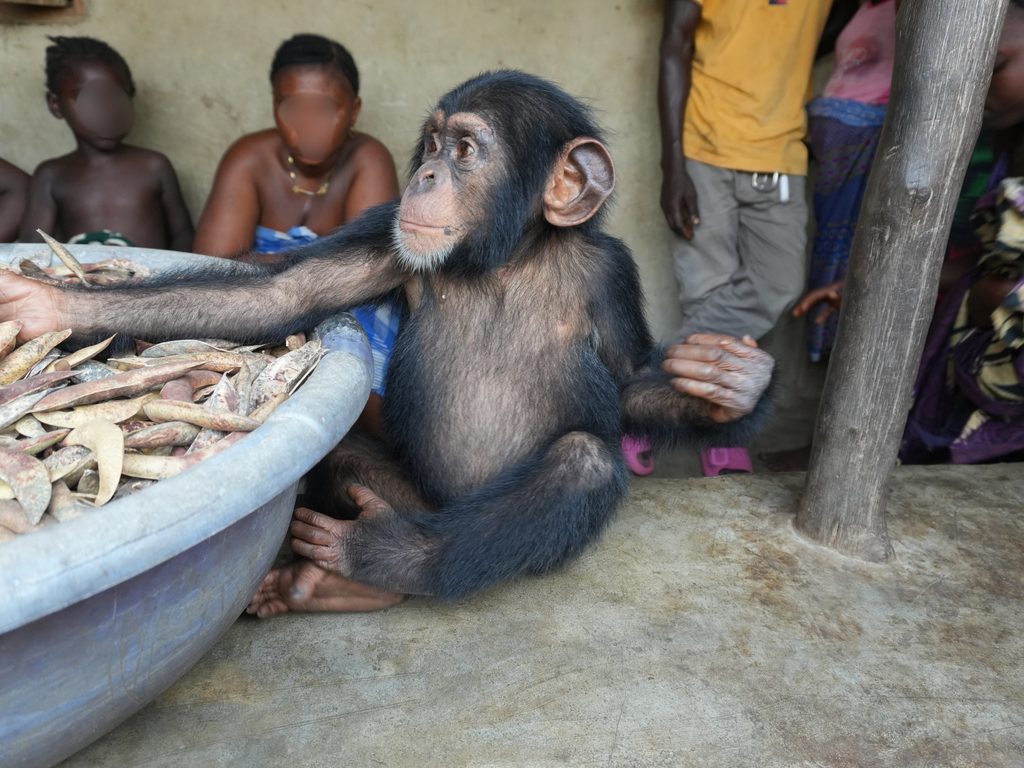
Every Chimpanzee rescue carries its own story; no two rescues are ever the same. Every journey into the field presents new challenges, difficult decisions, and unforgettable emotions. Behind every rescued chimpanzee is a life interrupted, a family destroyed, and a future that hangs in the balance. One such story is that of Andy, one of the latest arrivals at Tacugama, a baby chimpanzee rescued from a village in Sierra Leone’s Bo District, nearly four hours’ drive from Tacugama Chimpanzee Sanctuary Camp.
Unlike many rescues, Andy’s story was not defined by hostility or resistance alone. It was defined by love. Not the kind of love that justifies keeping a wild animal in captivity, but the kind of love that makes saying goodbye almost impossible.
When Love Makes Goodbye Difficult
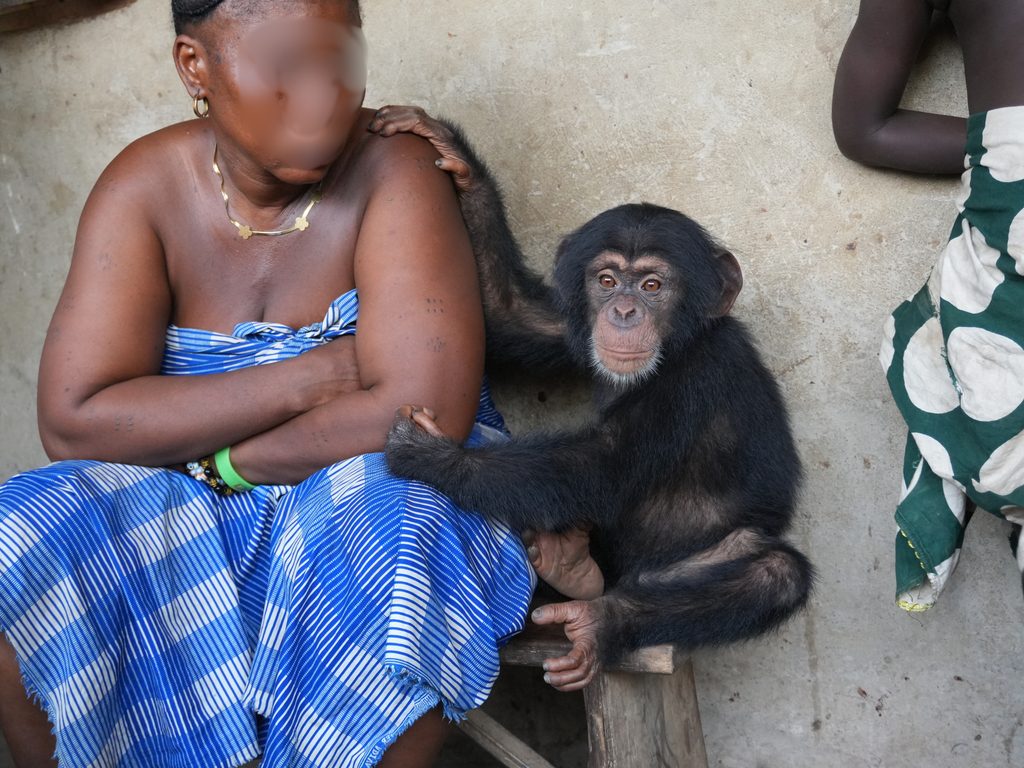
Words cannot capture the rawness of emotion in the photo of Andy during the rescue. With affection, sorrow, vulnerability, fear, compassion, and heartbreak. The emotions shared between Andy and the woman who had cared for him were unmistakable. A deep emotional bond had formed between an individual human and an individual chimpanzee; a bond that resembled nothing less than that of a devoted mother and her beloved child.
It was this emotional attachment that made Andy’s rescue one of the most challenging confiscations our rescue team had undertaken in recent months.
For three consecutive days, the Tacugama Rescue Team remained in the community, patiently engaging in dialogue, conducting sensitisation sessions, and negotiating with Andy’s caregiver. The mission was never about force. It can’t be! It was about helping people understand why a chimpanzee, regardless of how loved it may be, belongs in the forest, not in a human home.
What the Law Says About Wildlife Protection
The law in Sierra Leone leaves little room for ambiguity.
The Wildlife Conservation Act of 1972, under Section 7(a), clearly prohibits any individual from hunting or possessing protected wild animals. Furthermore, Section 7(g) makes it unlawful for any person to carry out activities likely to injure or disturb Sierra Leone’s flora and fauna.
The legislation was further strengthened by the Wildlife Conservation (Amendment) Act, 2022. Under Section 60, any person found guilty of hunting, possessing, buying, selling, or illegally trading a chimpanzee or other protected wildlife is liable upon conviction to imprisonment for not less than two years, a fine of not less than NLe 15,000 ($620 in current exchange rate), or both. These laws exist for a reason.
These laws exist for a reason
Few people realise the devastating cost of capturing a single infant chimpanzee. A baby chimpanzee is rarely taken without bloodshed. Chimpanzees are remarkably social animals that live in close-knit communities where every member plays a role in protecting the young. Mothers will defend their infants with every ounce of strength they possess. Fathers, siblings, aunts, uncles, and unrelated members of the troop often join in that defence. Within chimpanzee society, babies are treasured. They represent the future of the entire community.
As a result, poachers attempting to capture a baby frequently kill multiple adults before succeeding. It is estimated that the capture of one infant chimpanzee may result in the deaths of seven or more members of its troop.
This means that behind every rescued chimpanzee lies an invisible tragedy hidden deep within the forest. Entire families are torn apart! Communities are shattered! Generations disappear! Andy’s story was likely to be no different.
If Andy were still with his biological mother today, he would not be sitting quietly beside a human caretaker. He would cling tightly to his mother’s back as she traveled through the forest canopy. He would be breastfeeding beneath the shade of towering trees. He would be learning how to climb, forage, communicate, and navigate the rich social world of wild chimpanzees. Instead, Andy became an orphan, not because nature failed him, but because humans did!
The chimpanzee is not just another wild animal; it is Sierra Leone’s National Animal, a symbol of our natural heritage and an important ambassador for the country’s tourism identity. This national recognition reflects the ecological and cultural value of our wildlife. Moreover, chimpanzees and other endangered species are featured in Sierra Leone’s biometric passport, proudly representing the country’s rich biodiversity to the world. Yet, what does it mean to celebrate these animals as national symbols while allowing them to be hunted, trafficked, and taken from their natural habitats?
Our national pride must extend beyond symbols and official recognition; it must be reflected in our actions. Protecting chimpanzees, forests, rivers, and other endangered species is not solely the responsibility of conservation organisations. It is a collective responsibility shared by the government, communities, institutions, and every Sierra Leonean. If we are proud to showcase our wildlife to the world, we must also be willing to protect it. After all, our natural heritage is not simply what we inherit from previous generations; it is what we have a responsibility to preserve for generations yet unborn.
From Resistance to Rescue
During the rescue operation, it became evident that Andy’s caregiver had no intention of surrendering him voluntarily. Like many illegally kept wildlife species, there remained the possibility that he would eventually be sold, an act that is equally prohibited under Sierra Leonean law.
Yet the Tacugama team understood that conservation succeeds not through confrontation alone, but through education, empathy, and patience.
Over three days of conversations, awareness sessions, and respectful engagement with community members, perspectives gradually changed.
Understanding replaced misunderstanding. Knowledge replaced uncertainty. Compassion expanded beyond a single chimpanzee to encompass the survival of an entire species.
Eventually, Andy was safely surrendered to the Tacugama Rescue Team.
Upon arriving at the sanctuary, he immediately entered the mandatory 90-day quarantine period, during which the veterinary team conducted comprehensive medical examinations, behavioural observations, and disease screenings to ensure both his health and the safety of the resident chimpanzees. The veterinary team estimates that Andy is approximately one year old.
53 Years of Protection-So Why Are Chimpanzees Still Being Taken?
For more than 53 years, Sierra Leone has had laws protecting its wildlife. Why, then, do these violations continue? Is it driven by poverty? By weak enforcement? By limited awareness? Or is it a combination of all three? There are no simple answers.
For over three decades, Tacugama has travelled across Sierra Leone, educating communities about wildlife conservation, environmental stewardship, and the importance of protecting our natural heritage. These programmes have transformed countless attitudes and prevented many illegal wildlife cases before they occurred. However, education requires resources. Conservation requires investment.
Unfortunately, limited funding often means difficult choices. Resources that could expand education and community outreach must sometimes be redirected towards emergency rescues, veterinary care, sanctuary operations, and the daily welfare of the chimpanzees already under Tacugama’s protection.
Like many conservation organisations, Tacugama relies heavily on the generosity of donors, supporters, and members of its Guardianship Programme. Every outreach trip, every rescue operation, every veterinary treatment, every litre of fuel, every bag of food, and every staff member caring for more than 120 rescued chimpanzees is made possible through partnerships with people who believe that Sierra Leone’s wildlife deserves a future.
A New Family, A Second Chance
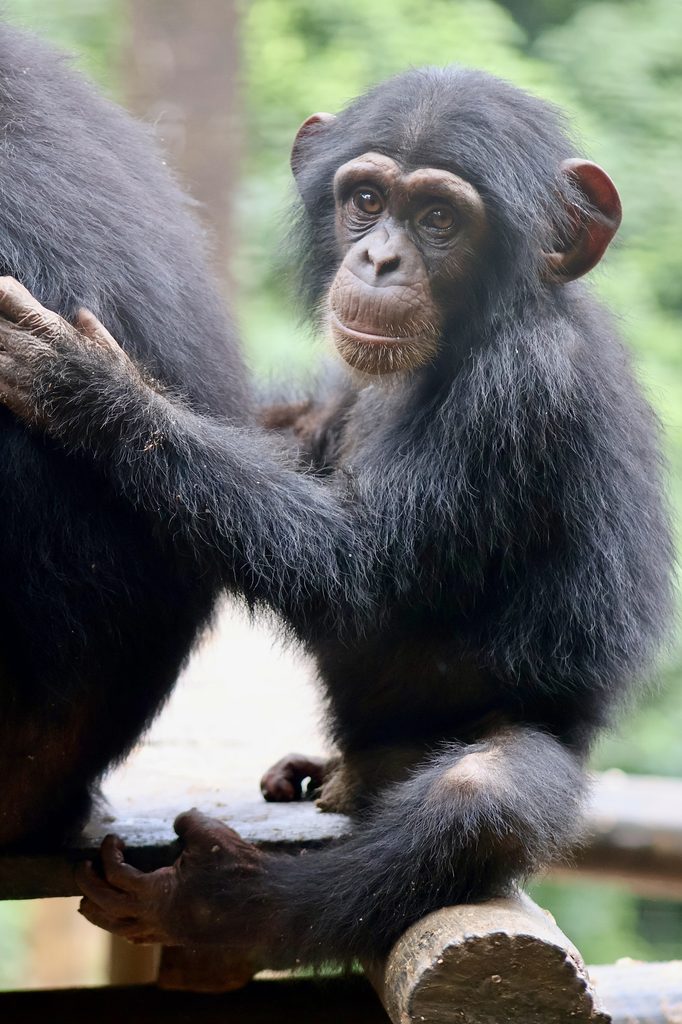
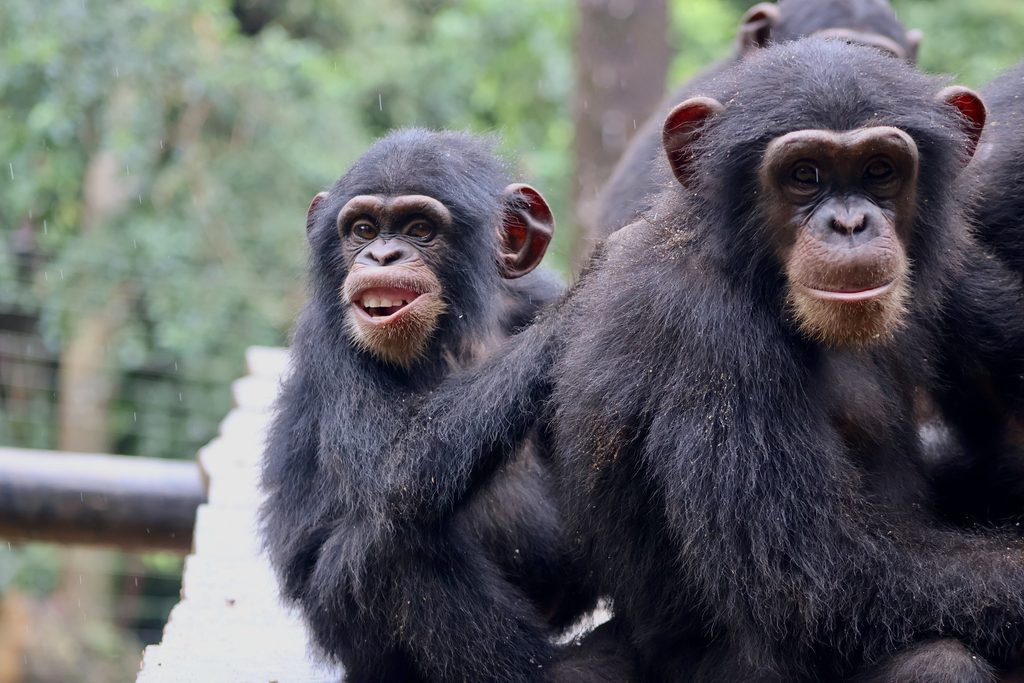
Today, Andy’s story carries a little more HOPE. After his 90-day quarantine and medical assessment, Andy was successfully integrated into Tacugama’s Nursery enclosure, where 18 other rescued baby chimpanzees live. His integration was remarkably smooth.
This is why public awareness remains one of the most powerful conservation tools. When people understand the consequences of keeping wildlife as pets, fewer animals fall victim to the illegal wildlife trade. When communities know the law, they are empowered to make better decisions. When children learn to value wildlife, they grow into adults who protect it.
Shine was the first to befriend him, followed by Rushni. Since then, Andy has become increasingly social, getting along well with the others and readily opening himself up for grooming, a beautiful sign of trust and acceptance.
Andy has lost his biological family, but he has found a new one. This new family can never replace the mother and troop he lost, but it offers him something deeply familiar: companionship, affection, protection and belonging.
And perhaps that is what makes Andy’s story so powerful. Like humans, chimpanzees are vulnerable beings who need family, love and security. They experience fear, grief, affection and joy. And just as every human deserves the freedom to live with dignity, chimpanzees deserve the freedom to live as chimpanzees.
Andy did not choose to become an orphan, nor did he choose captivity. But today, he has been given a second chance a chance to heal, to belong, and hopefully one day, to experience the freedom that was taken from him.
Be Their Voice. Protect Their Future
Andy should never have needed rescuing in the first place. His story reminds us that rescue is only the last line of defence. The real victory is preventing another baby chimpanzee from becoming an orphan.
We can all play a part. Do not buy, sell, keep, or support the illegal trade in chimpanzees and other wildlife. Speak up when you see wildlife being exploited. Educate your families and communities. Support conservation organisations and the people who work every day to protect Sierra Leone’s wildlife.
Together, we can ensure that fewer chimpanzees like Andy lose their families, and that more of them have the chance to remain where they truly belong: in the wild, with their own kind, and free. Because the greatest act of love we can ever show a wild animal… is allowing it to remain wild.
About the Writer
M. Baballie Sie is a Communications Professional, conservation advocate, and dedicated volunteer passionate about environmental sustainability, youth empowerment, peacebuilding, and community development. He leverages the power of storytelling, media, and public engagement to raise awareness, inspire positive change, and advance conservation efforts. He currently serves as the Head of Public Relations at Tacugama Chimpanzee Sanctuary, where he helps amplify conservation messages, promote environmental awareness, and strengthen public engagement in protecting wildlife and natural heritage.

