

Story by Fredrick Mugira | Photos by Renato Granieri
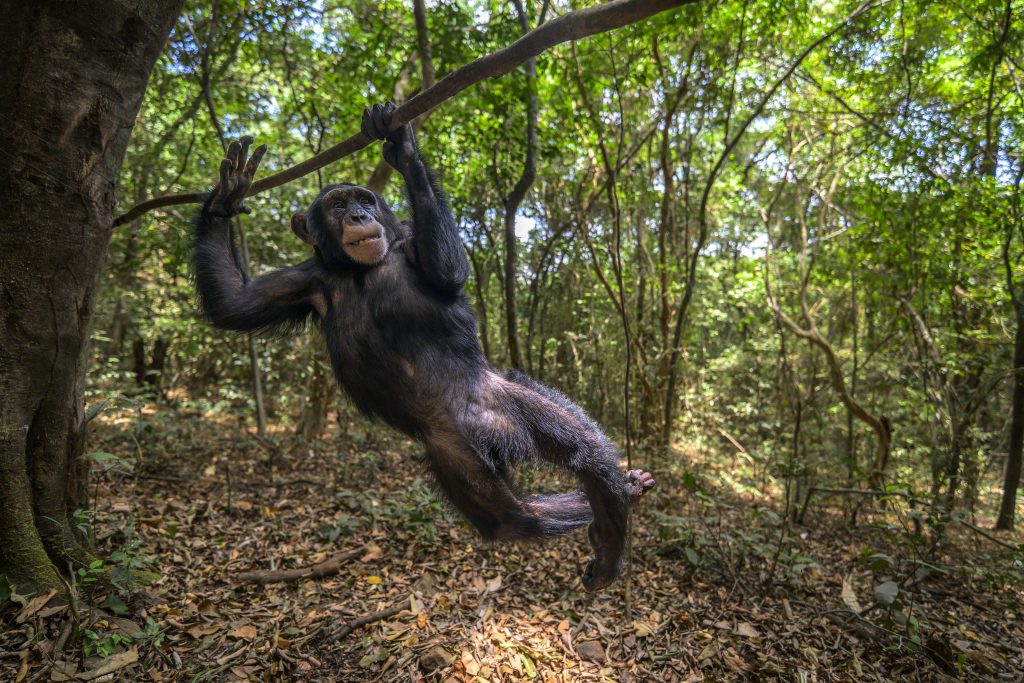
In 2018, Ramba, a young chimpanzee, arrived at the Tacugama Chimpanzee Sanctuary in Sierra Leone. That year, after being rescued at just one year old from a life as a pet in a small village in Sierra Leone, she was given a second chance at being a chimpanzee.
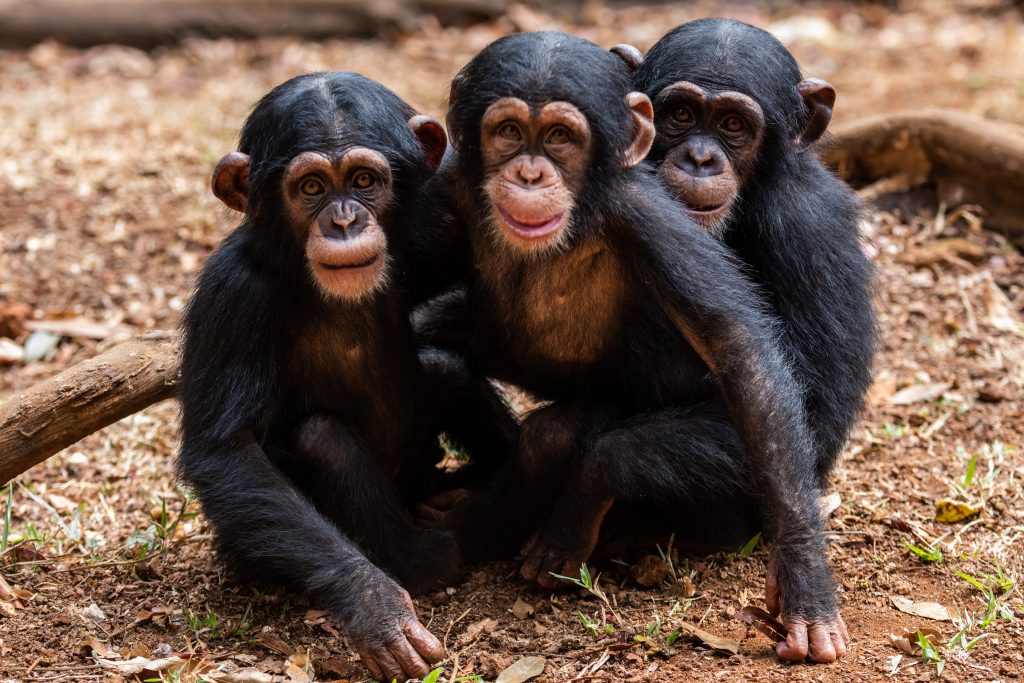
For the next six years, Ramba, a critically endangered western chimpanzee (Pan troglodytes verus), thrived, living in a forest enclosure with 13 other chimpanzees under the watchful eye of an alpha male named Gorilla. However, in November 2024, the vibrant life she had grown to love took a terrifying turn.
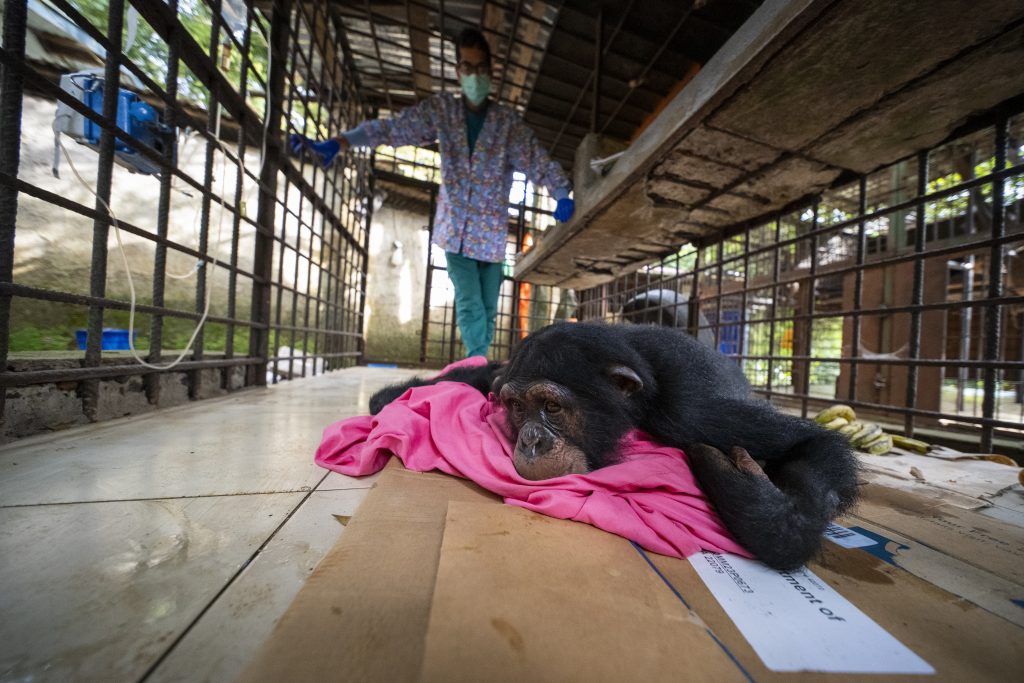
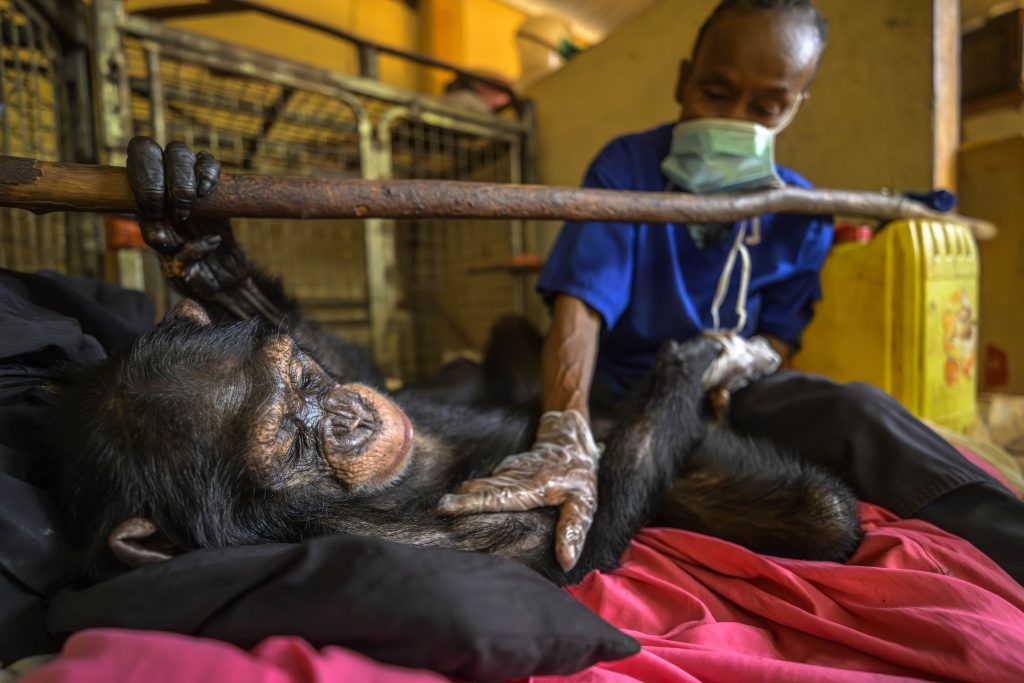
Following a morning routine check caregivers noticed Ramba acting strangely. She was weak and began dragging her limbs. Within a short time, her condition progressed into tetraparesis, a weakness in all four limbs that, at its worst, left her almost completely paralyzed and unable to eat.
With no advanced veterinary labs nearby, the team at Tacugama Chimpanzee Sanctuary refused to give up. They fought fiercely to figure out what was wrong. Through a CT scan and one of the first-ever MRI studies performed on a chimpanzee in Sierra Leone, specialists suspected that Ramba had contracted herpesvirus encephalitis—a rare inflammation of the brain tissue in apes but common in humans. Though the team feared she might not survive, Ramba has now proved to be a fighter.
Africa’s great apes—chimpanzees, bonobos, and gorillas—share a common ancestor with humans. The strongest evidence of this shared history is in DNA.
In particular, humans and chimpanzees share about 98.8% of their DNA. This means that their cells, tissues, and immune defenses operate so similarly that they don’t just share traits—they share vulnerabilities. The danger in this genetic bond is that it opens a door, allowing diseases to easily cross over from humans to chimpanzees and vice versa.
Mirror of Human Paralysis
The neurological challenges Ramba faces draw a striking parallel to human medicine. Dr. Alvin Akansasira, a medical doctor at Uganda’s national referral hospital, Mulago in Kampala, notes that paralysis in humans is equally complex and multifaceted. “Paralysis in humans can be due to a number of factors, really; the causes could be multiple,” Dr. Akansasira explains.
He points out that while trauma to the spinal cord is a common cause, viral illnesses often trigger an “ascending sort of paralysis that begins from the limbs—from the feet, the lower limbs—up to the arms,” a progression tragically similar to what was observed in Ramba.
Dr. Akansasira further outlines how infections like bacterial meningitis, traumatic brain injuries, strokes, and even surgical risks can lead to a loss of mobility. “There are usually quite a number of ways to classify them… bacterial and viral infections, traumatic injuries to the brain or spinal cord, strokes, and drug-induced causes.”
In particular, Ramba is suspected to be suffering from Herpesvirus Encephalitis, a condition Dr. Akansasira says is a relatively common occurrence in medical practice, particularly among individuals whose “immune systems are not functioning at full strength.”
He points out that being “immunosuppressed” is a primary risk factor. In humans, the most frequent cause of this weakened immunity is the HIV virus, according to Dr. Akansasira. He narrates that when natural defenses are lowered, viruses that are normally manageable can become “debilitating,” leading to serious brain infections.
Dr. Akansasira also notes that this condition is frequently seen in newborns, who can develop encephalitis shortly after birth.
Tracing the Rare Roots of Paralysis in Great Apes
Paralysis is extremely rare among African great apes. The rarity of Ramba’s condition is best highlighted by those on the front lines of primate medicine. Dr. Benard Ssebide, the Gorilla Doctors’ head veterinarian in Uganda, notes that throughout the organisation’s four decades of conservation medicine in Central Africa, they have “never seen or recorded a case of paralysis.”
And when it does occur, paralysis in apes often stems from direct human interference, such as illegal wire snares or vehicle collisions, or from the zoonotic disease transmission.
For example, in regions like Uganda’s Budongo and Kibale forests, according to studies, paralysis is often more immediate and violent, caused by illegal wire snares that sever nerves. Also, a study in Bulindi, Uganda, has documented fatal spinal trauma in chimpanzees struck by vehicles while attempting to cross roads that go through their habitats.
More recently, the Republic of Congo saw the first confirmed case of Acute Flaccid Paralysis (AFP) caused by a specific human pathogen. In 2015, a juvenile chimpanzee at the Tchimpounga Sanctuary lost the use of all four limbs and the torso, a condition referred to as quadriplegia, in medical terms. The primary culprit? Human Enterovirus C99, a virus typically associated with poor sanitation in human populations that can easily jump the species barrier.
However, not all loss of mobility is a final sentence in apes. A 2026 case study recently detailed the recovery of a juvenile chimpanzee from tetanus. Initially, the chimpanzee was paralyzed by lockjaw and rigid muscle spasms, resembling tetanus—a bacterial disease that attacks the nervous system and locks the jaw and neck muscles. It seemed like an impossible battle. However, after two months of intensive veterinary nursing, it defied the odds and made a full recovery.
Researchers are also learning to look closer. In 2005, a chimpanzee named Faustino in Gombe sparked fears of a new polio outbreak after appearing paralyzed. Experts later discovered the paralysis was actually the result of extreme dehydration and malnutrition, a condition that, although severe, was reversible.
Research across the continent has identified a connection between human-origin viruses and lifelong disabilities in chimpanzees. One of the most documented cases of mass paralysis in the wild remains the 1966 polio outbreak in Tanzania’s Gombe National Park.
Dr. Gladys Kalema-Zikusoka, a National Geographic Explorer and Uganda’s first wildlife veterinarian, notes that this event is among the earliest recorded instances of zoonotic disease transmission from humans to great apes. She explains that the chimpanzees likely contracted the virus through fecal contamination of Lake Tanganyika’s water, introduced by local human residents.
This story is detailed in the book In the Shadow of Man by late Dr. Jane Goodall, who provides a firsthand account of the devastating polio epidemic that struck the chimpanzee population at Gombe National Park.
Goodall describes this period as the most painful of her life, following the emotional impact of witnessing the chimps’ suffering and social isolation. To combat the spread, she even attempted to deliver polio vaccines hidden in bananas.
Decades later, the lessons from Gombe are more relevant than ever. “It’s necessary to vaccinate for polio as it can spread to wild animals through shared water resources,” explains Dr. Kalema-Zikusoka, who is also the CEO of Conservation Through Public Health (CTPH).
Fortunately, the severe polio outbreaks that once put ape populations in regions like western Tanzania at risk have largely reduced, because of widespread vaccination efforts in humans across Africa. For context, in just the second quarter of 2025, the World Health Organization reported that 161 million children received the polio vaccine across Africa. This reduces the virus in the environment and makes it much less likely to spread to other species.
Even as the immediate threat of polio recedes, lessons from past crises continue to shape modern wildlife conservation. Prosper Laurent Kwigize, an experienced journalist who has spent years covering wildlife issues in Tanzania’s Gombe National Park, explains that the shadow of past outbreaks, such as the one at Gombe, continues to heavily influence conservation priorities today.
He reports that a “One Health strategy is now the primary defense” for chimpanzees in Western Tanzania’s national parks. This government-led initiative focuses on preventing the cross-infection of diseases between wildlife and human populations through a “cooperation between national park officials, villagers, and health workers,” according to Kwigize. The One Health approach recognizes that the health of humans, animals, and the environment are all interconnected. According to the Arcus Foundation’s State of the Apes (Volume 5) report, which focuses on disease, health, and ape conservation, caring for both people and apes together is key, especially to preventing disease from spreading between them.
Details of Devotion to Ramba
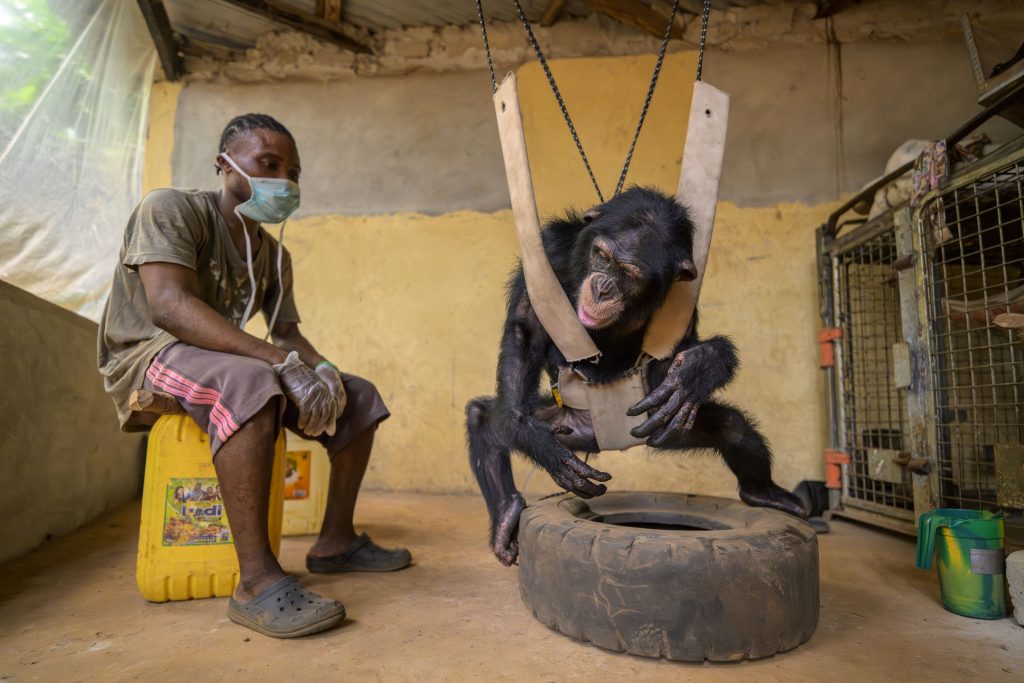
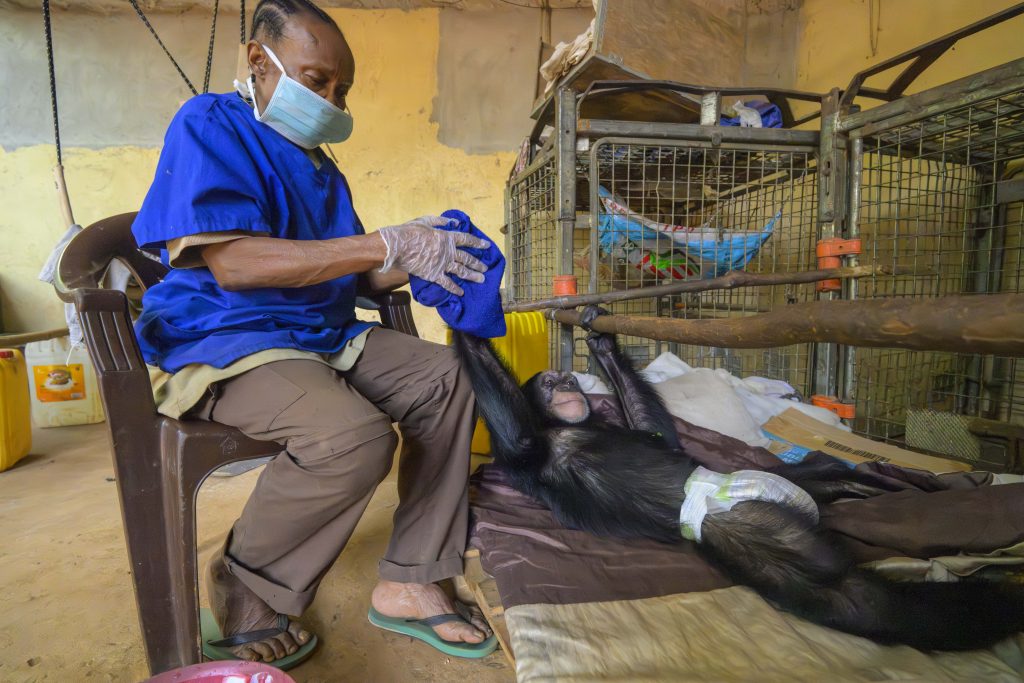
Ramba’s journey back to life at Tacugama Chimpanzee Sanctuary has not only been about the big victories. It has also grown from the quiet, small moments of care that often go unnoticed. She is never truly alone. A dedicated team stands by her side every hour, giving their all to help her recover.
At the heart of this care is Posseh Kamara, commonly known as Mama P. She begins the day by cleaning Ramba, changing her diaper, and then applying warm compresses and a gentle massage. These daily routines are moments of deep connection where Mama P checks for skin problems and comfort. She notes that Ramba’s personality keeps her motivated.
“Ramba makes it easy to stay motivated,” says Mama P. “She is kind, joyful, and eager to learn.”
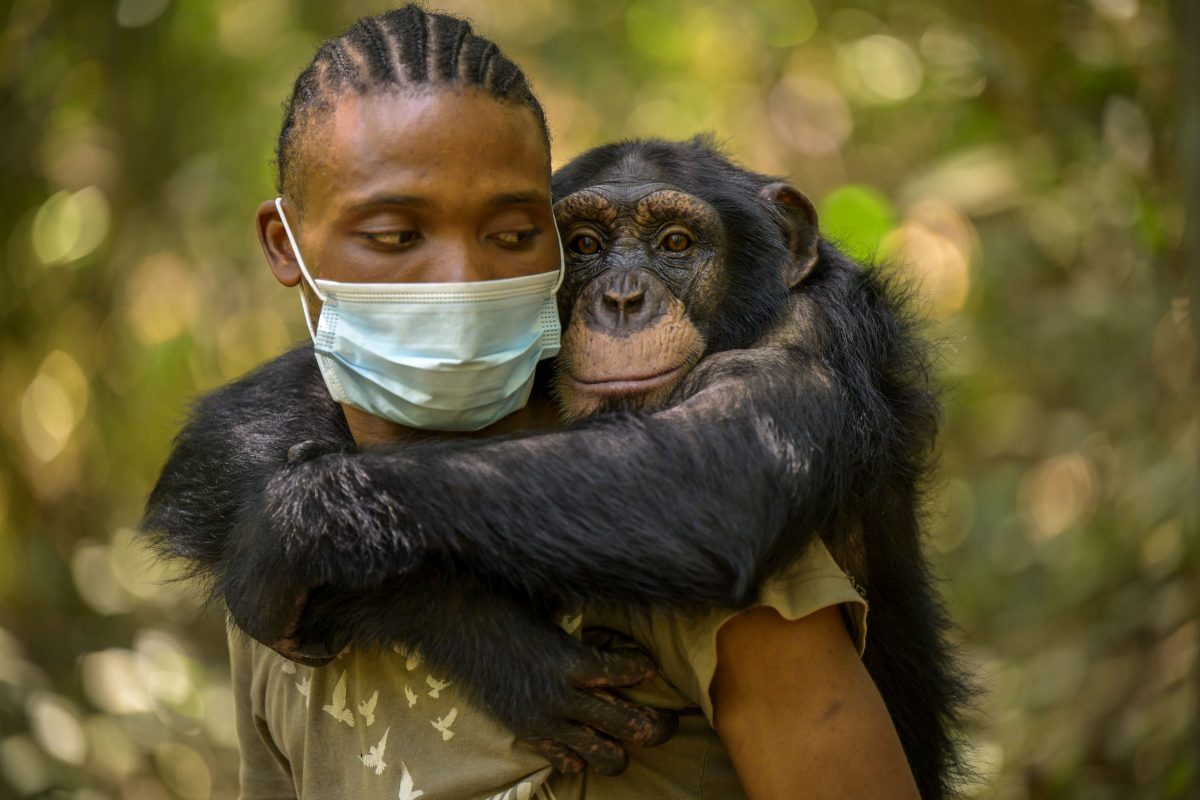
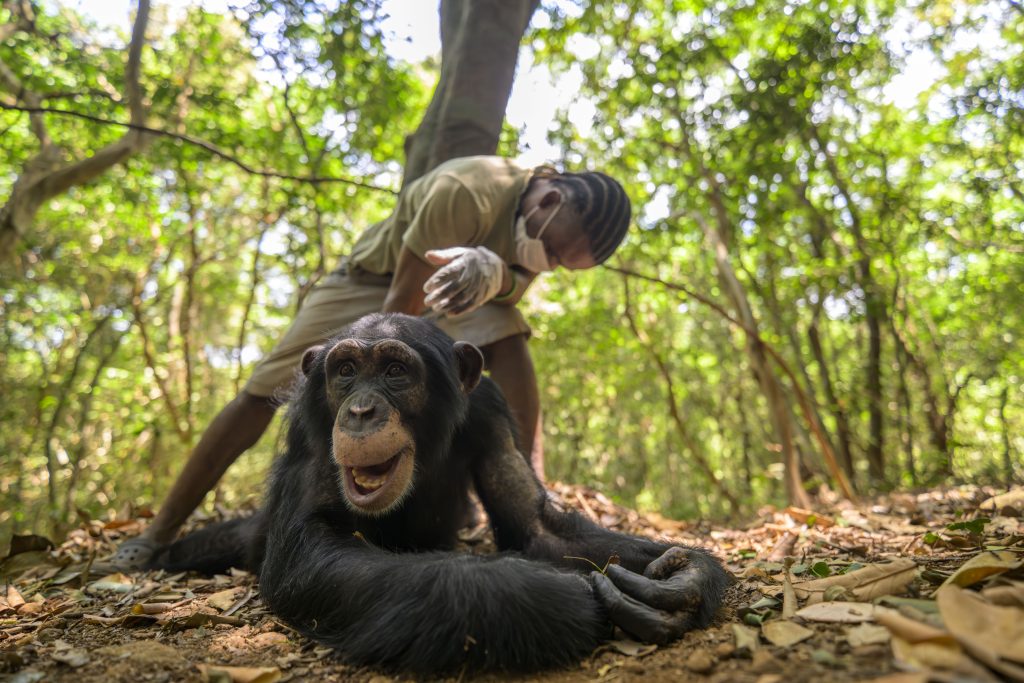
During the day, the forest remains central to Ramba’s life through the strength of her caregiver, Daniel Conteh. When Ramba realizes it is time for her forest walk, she greets Daniel with loud, excited pant-hoots. Conteh carries her on his back into the trees.
According to Conteh, Ramba is not just a chimpanzee in his care; she has become family. In the forest, they spend hours together. This gives Ramba a chance to feel the tree bark, touch the rocks, and watch the sky through the foliage. “Carrying her into the forest feels natural now. She is not just a chimpanzee in my care; she feels like family,” narrates Conteh.
Intelligence and Agency
Even with limited mobility, Ramba is clever—she learned to unfasten her own diaper by hooking a single finger onto the fastener. She is also very clear about her preferences. While she loves apples, yogurt, and mangoes, she will only drink protein powder if it is a specific vanilla ice cream flavor. If offered strawberry or chocolate, she expresses her autonomy by closing her lips tightly and turning her face away.
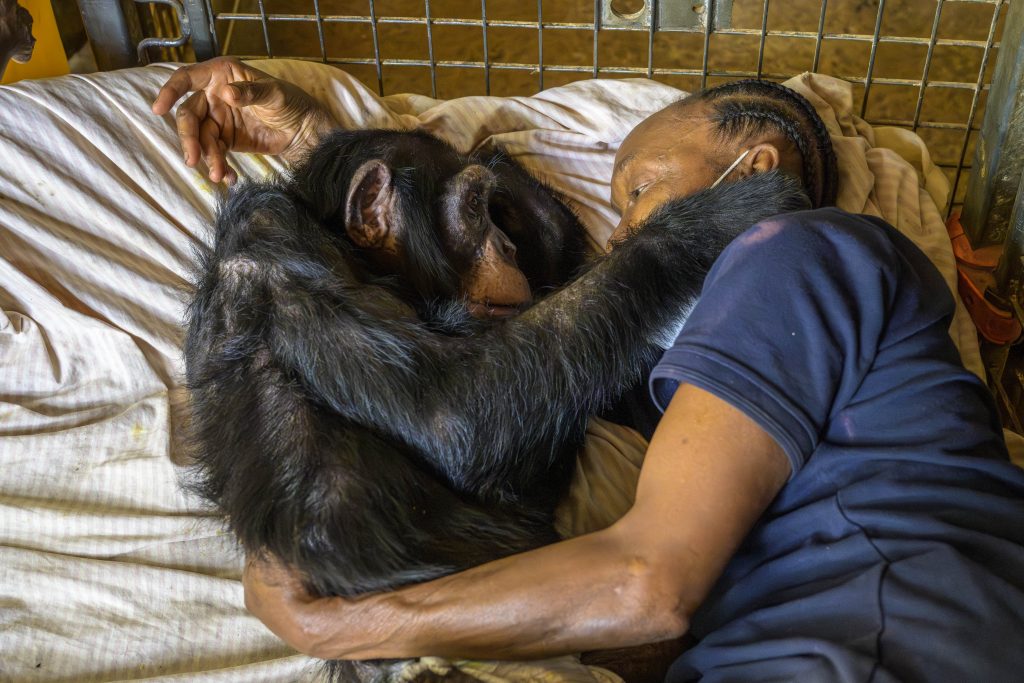
As the sun sets, care transitions to Gladys Kargbo, who sleeps in the same room with her every night. Ramba does not cope well with being alone, so she and Gladys sleep side by side on a mattress.
According to Kargbo, having someone close by gives Ramba a sense of “safety and reassurance.” She says it allows her to “rest calmly, knowing she is not alone.
Ramba is now a special needs chimp. Her social grouping is mostly humans, and she has bonded with her caregivers. However, to ensure she doesn’t lose her identity, the sanctuary has arranged her space so that she can see other chimpanzees. Whenever possible, they bring young chimps around her to provide a connection to her own kind.
This individualized attention to Ramba’s well-being is part of a broader commitment at Tacugama Chimpanzee Sanctuary. This sanctuary currently houses over 120 rescued chimpanzees. Their core mission bridges wildlife protection with community support. Founder Bala Amarasekaran sums up their approach with the phrase, “no one is left behind at Tacugama.” This is evident in their round-the-clock specialized care and the use of advanced medical tools, such as the MRI scans done for Ramba, which are uncommon in the area.
Decisions that Shape Survival
Ramba’s story is not just a Sierra Leonean story; it is a testament to the challenges facing great apes across Africa. Kari Jackson, Executive Director of the award-winning NGO Sustainable Run for Development (SURUDEV) in Cameroon, emphasizes that Ramba’s struggle serves as a wake-up call for conservationists everywhere.
“Ramba’s journey from a life in captivity to her brave fight against illness reminds us that every individual life is a pillar of our biodiversity,” says Kari, further stressing that, “in conservation, we often talk about numbers and populations, but Ramba teaches us the power of individual resilience.”
Diana Kanweri, a chimpanzee research assistant and wildlife camera operator whose work in Uganda’s Kibale Forest National Park is featured in the Netflix series Chimp Empire, emphasizes the deep human-ape connection. Operating in a landscape where over 1,500 chimpanzees live, Kanweri warns that human impact is the deciding factor for apes’ survival. She asserts that “humans must understand that apes are not different from us,” and urges that humans “should be very thoughtful of the decisions they make because those decisions can erase or make apes thrive.”
The Path Forward
The team at Tacugama Chimpanzee Sanctuary sadly accepts that Ramba has sustained what appears to be permanent neurological damage. She will likely always be paralysed, and she may not be able to return to her original group or live in a standard forested enclosure.
However, Ramba has shown resilience, adapting well and continuing to enjoy the basic joys of chimpanzee life. As she is still young, the team remains hopeful that with targeted physical therapy, she can improve significantly.
Tacugama Chimpanzee Sanctuary is currently gathering information about other paralyzed chimpanzees worldwide to learn new ways to improve her condition and provide the best possible environment for her future. It is evident that Ramba’s future depends on the sustainability of this high-intensity care model. This new normal for Ramba requires more than just compassion—it requires specialized resources.
As one of the measures to secure her future, Tacugama Chimpanzee Sanctuary has set up a dedicated portal through its partnership network to manage Ramba’s long-term welfare and ensure she reaches her next milestone in physical development. The Support Ramba initiative allows members of the public to contribute directly to her clinical and rehabilitation needs.

