
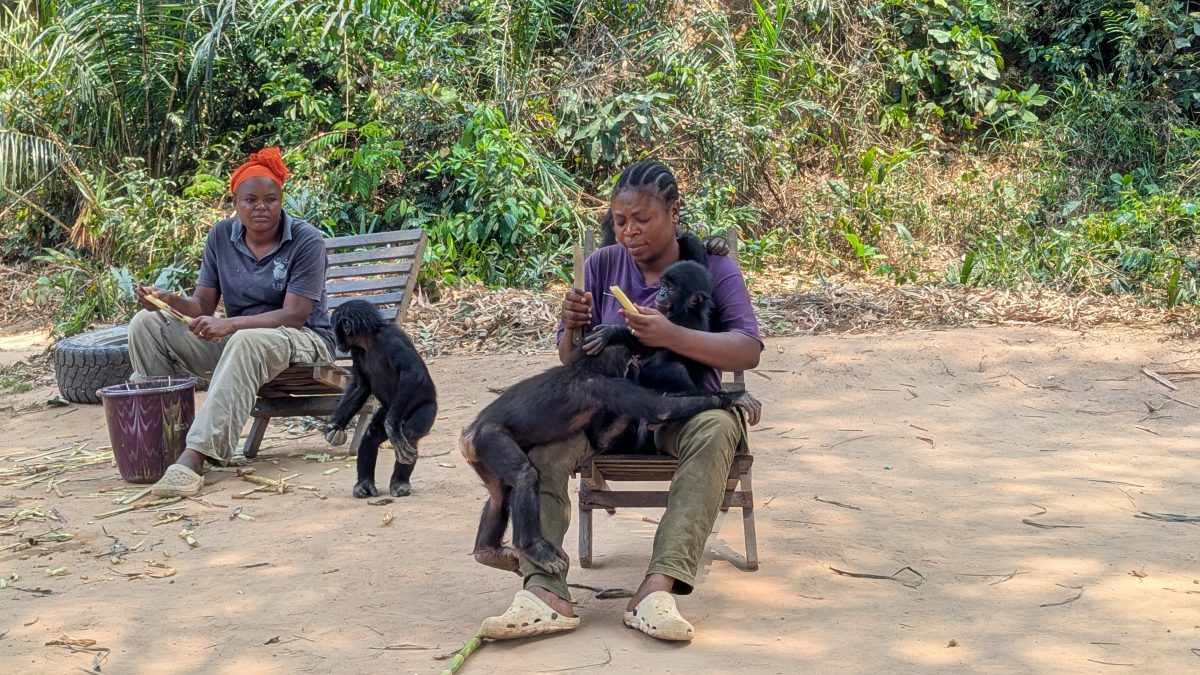

At a sanctuary near Kinshasa, human “mothers” and conservationists struggle to save orphaned bonobos from the double threat of poaching and a changing climate.
Here’s what you’ll learn when you read this story:
- In Kinshasa, human caregivers form close emotional bonds with young bonobos to help them recover from the trauma caused by the illegal wildlife trade.
- Efforts to return bonobos to the Basankusu territory have led to a tense dispute over land rights and promises made to the local community that have not been kept.
- With a reproductive cycle of one birth every five years, it can take a decade for a population to replace two lost adult bonobos.
- To keep one adult bonobo healthy, local farmers provide seven kilograms of fruits and vegetables each day.
Story and Photos by Denise Kyalwahi
This story was produced with funding from Earth Journalism Network.
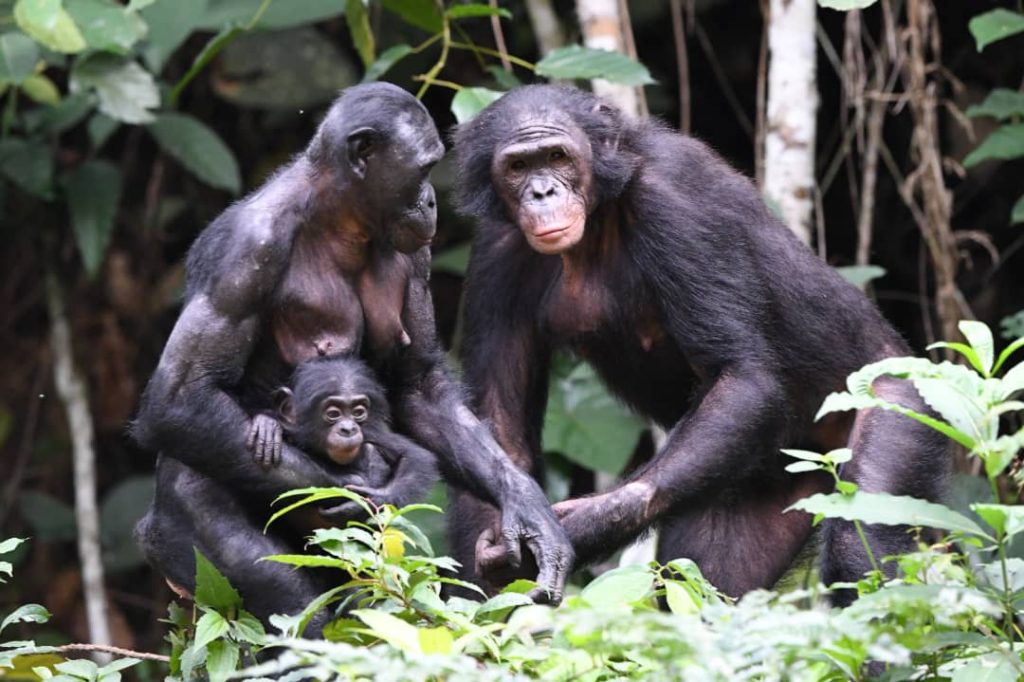
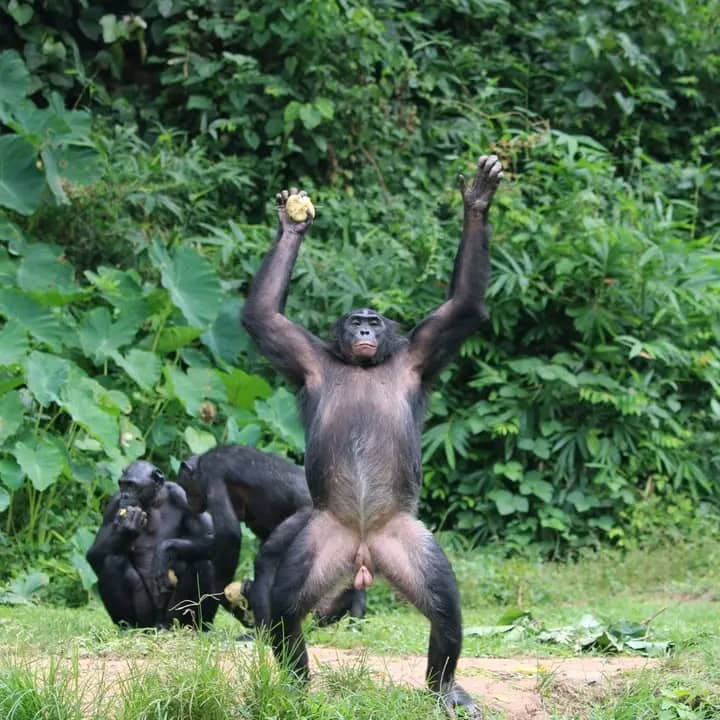
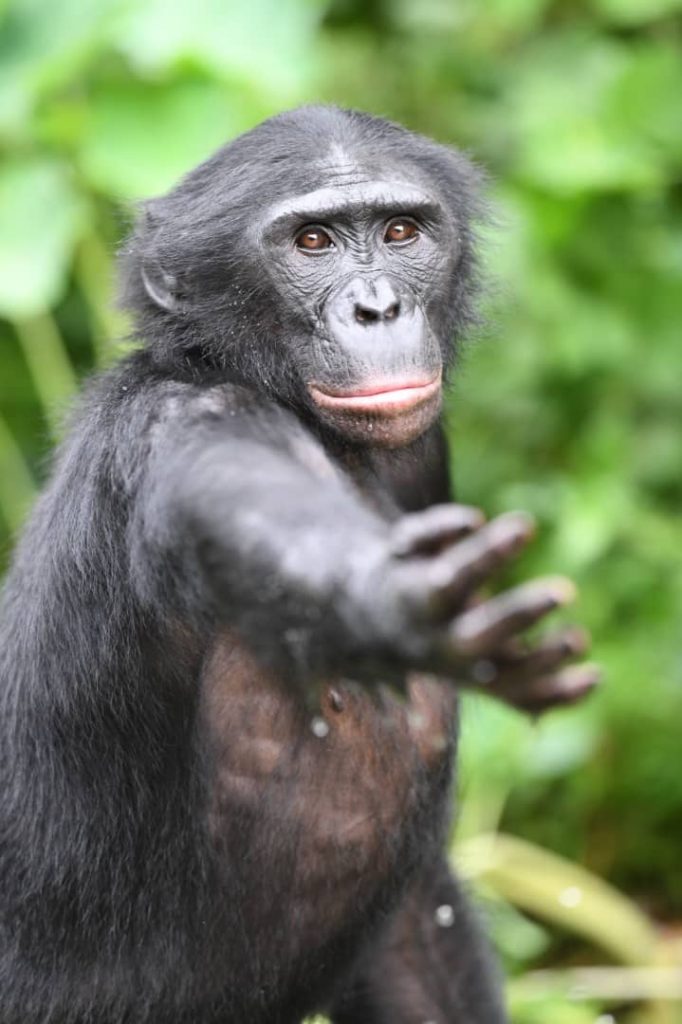
Just a few kilometres from the heart of Kinshasa, the Lola ya Bonobo sanctuary offers a unique experience for visitors. Here, bonobos move freely and fearlessly, often approaching people. Known for their intelligence and ability to interact with humans, these primates’ closeness highlights their vulnerability. One of them, Moseka, aged 32 and among the oldest in the sanctuary, approaches with her hand extended, a sign of hunger, before stepping away cautiously.
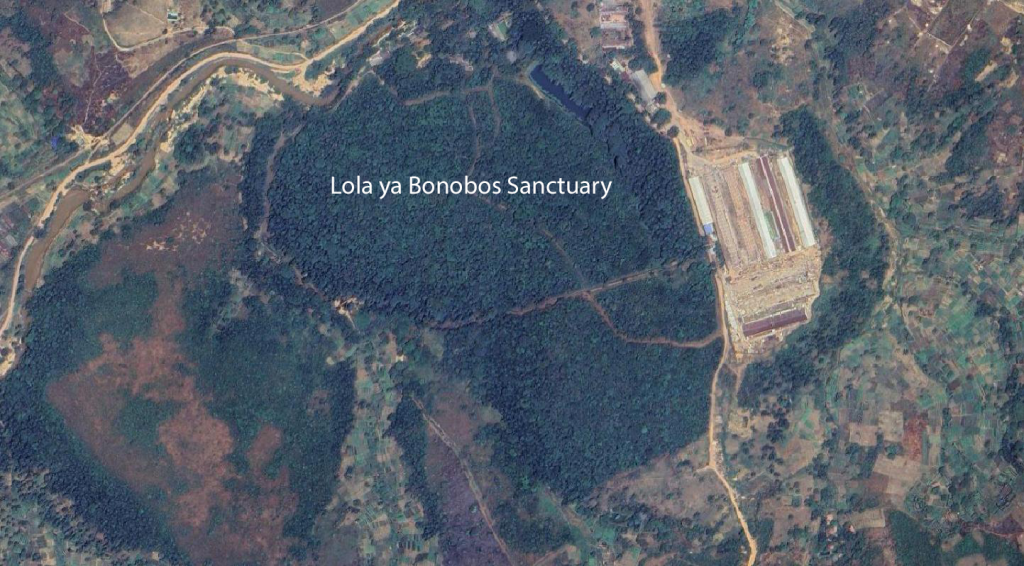
“Bonobos are often afraid of outsiders; they see you as strangers, and therefore a threat,” explains Ms. Suzy Nzuzi, head of bonobo social welfare and ecotourism at the NGO Les Amis des Bonobos du Congo (ABC) at the Lola ya Bonobo sanctuary.
Here, everything is organized to give them a second chance. Victims of poaching or separated from their groups, most are taken in at a young age, often traumatized.
The Surrogate Mothers
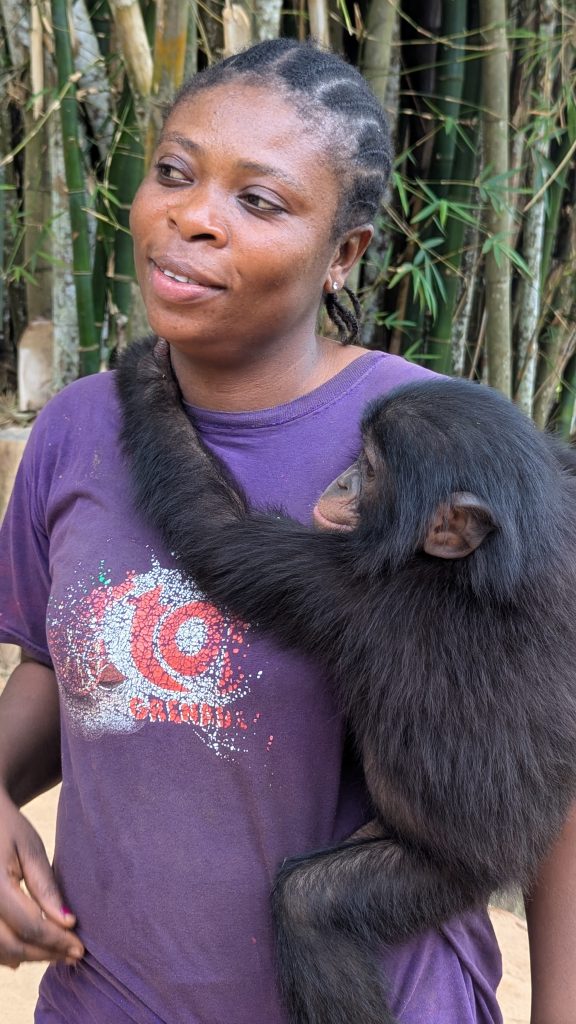
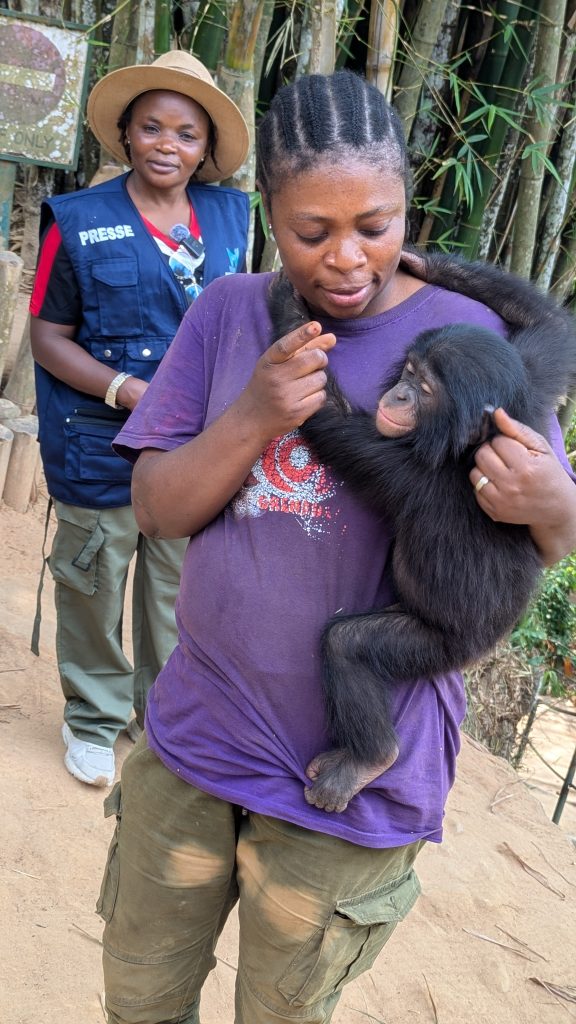
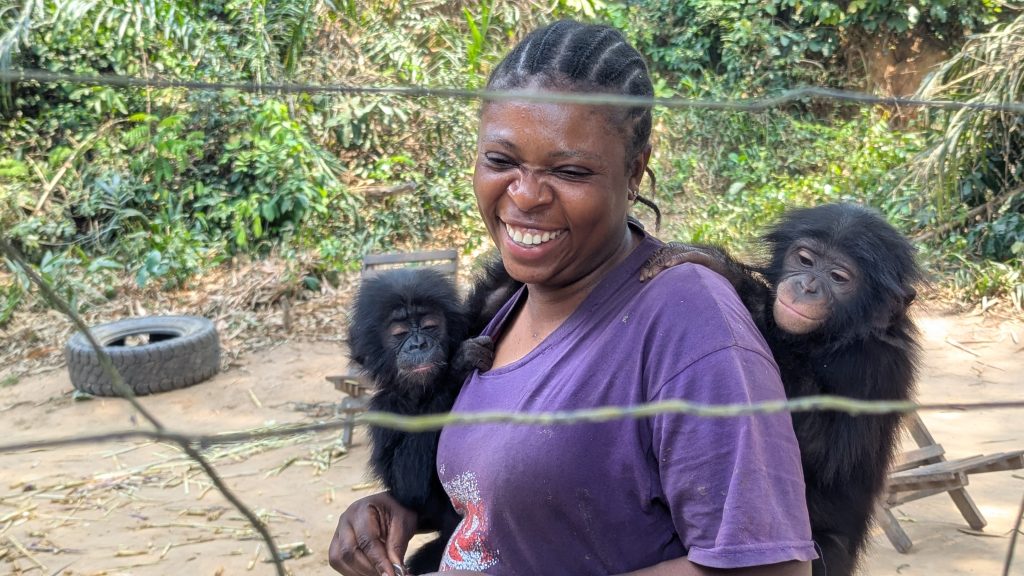
At the heart of the system are human caregivers—mostly women—who play a central role as surrogate mothers. They feed, carry, and comfort orphaned bonobos, recreating an emotional bond essential for their development. Kenge, in her thirties, has worked here for seven years. She is currently in isolation, caring for sick baby bonobos.
“This bonobo is suffering a lot,” she says, pointing to a malnourished individual she has been caring for for 21 days. This bonobo was seized from poachers at a market in the commune of Maluku, one of the outskirts of Kinshasa, according to eco-guards.
Some young bonobos, especially the most fragile, never leave their caregivers’ side, day or night. This carefully built relationship aims to compensate for a brutal rupture: separation from their biological mother, often killed. In total, Lola ya Bonobo sanctuary hosts 69 individuals, including 27 orphans and three currently ill.
A medical team ensures constant monitoring. The most sensitive cases are kept in quarantine, while others gradually move into more open environments. Because bonobos are often in contact with humans, they can suffer from the same diseases.
According to Joël Itombo, an animal technician at the Congolese Institute for Nature Conservation, several diseases regularly affect these animals:
“The main diseases found in bonobos include Ebola, transmitted through contact with infected fluids; human respiratory infections such as influenza or coronavirus; hepatitis and enteroviruses; tuberculosis, salmonellosis, and campylobacteriosis; as well as parasitic diseases such as amoebiasis, ascariasis, or skin fungal infections,” he explains.
The genetic closeness between bonobos and humans—often seen as a scientific advantage—becomes a major risk factor here.
“Bonobos have a fragile immune system. A simple respiratory outbreak originating from humans can wipe out an entire population in a few weeks,” warns Joël Itombo. This vulnerability requires constant vigilance in interactions between humans and animals, especially in conservation settings.
Vulnerability to Climate Change
In April 2025, severe flooding hit the Kinshasa region. At Lola ya Bonobo, several infrastructures were damaged: access roads, housing, and reception areas.
“We lost a significant amount of space to house our bonobos due to the floods. Our visitor lodges were completely destroyed, and within the enclosure, some areas dedicated to recreation and learning for the orphans were washed away,” says Suzy Nzuzi.
Even sanctuaries meant to protect wildlife are not immune to climate disruption. Beyond material damage, the entire organization was affected.
Floods also destroyed the gardens of nearby residents who supply food for the bonobos. “Our fields were washed away by the water, and we no longer have vegetables to offer the bonobos,” says Monika Kashala, a farmer living along the Kimwenza River that runs through the sanctuary.
The sanctuary’s operations also rely on a local network. Farmers from surrounding areas supply fruits and vegetables in large quantities, indirectly contributing to the survival of the primates.
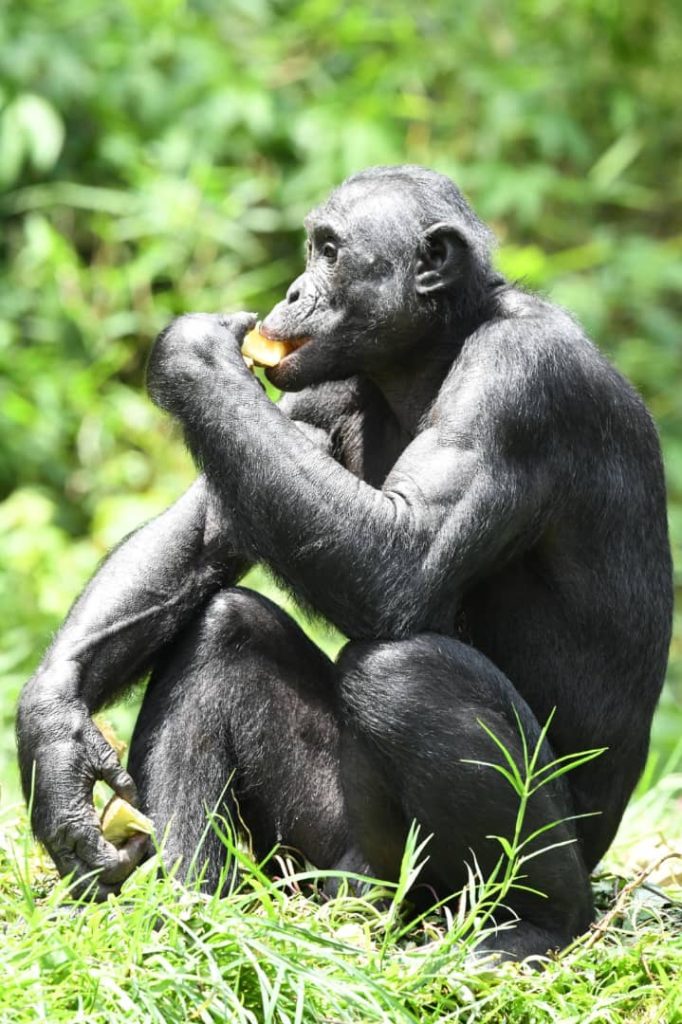
Each day, several kilograms of food are needed to keep the animals healthy. According to sanctuary estimates, an adult bonobo consumes about seven kilograms of food daily, mainly fruits and vegetables. Young bonobos, for their part, drink milk and eat vegetables for up to five years.
A Fight Beyond the Sanctuary
Created in 2009, the sanctuary receives at least two orphaned bonobos each year, rescued from wildlife traffickers.
According to Joël Itombo, the main threat facing bonobos comes from humans: “Poaching is ongoing in protected areas of the DRC. When we talk about threats to bonobos today, poaching is the most persistent issue.”
He adds that bonobos are hunted for several reasons: the sale of infants on the black market as pets, bushmeat consumption, and sometimes for local beliefs or traditional medicine.
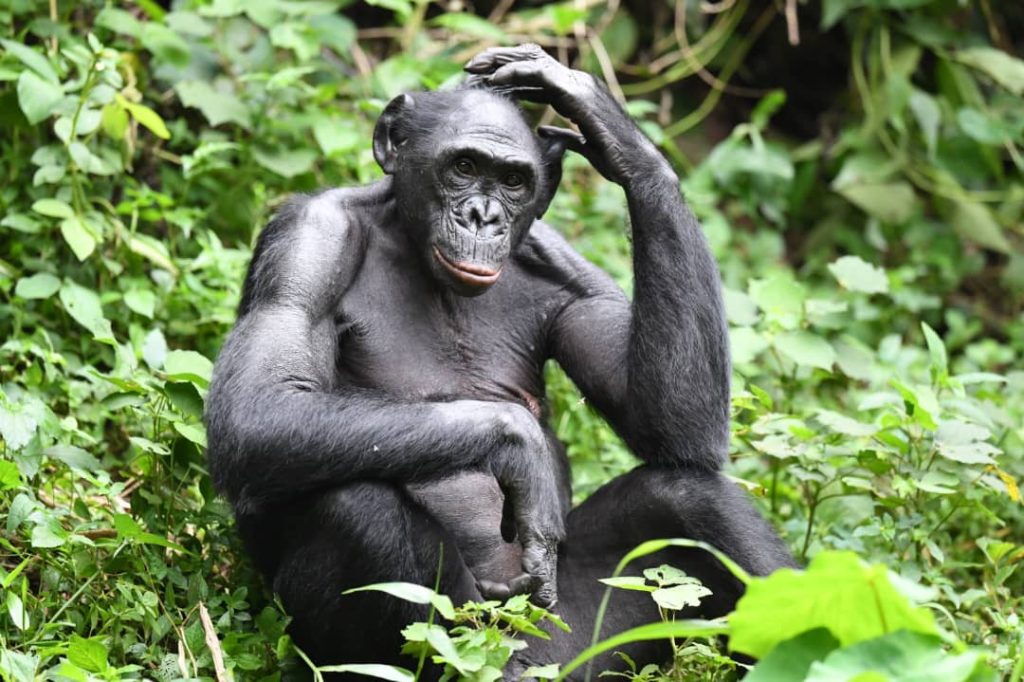
“Bonobos are among the rare endemic species and are unfortunately critically endangered. Their slow reproductive cycle increases their vulnerability,” explains Suzy Nzuzi. She notes that poverty and rapid population growth in Kinshasa are key drivers of bonobo hunting.
“A female gives birth only once every five years,” adds Joël Itombo. “If ten bonobos are killed, it will take about ten years to hope for just two new adults. This slow reproduction makes the species extremely vulnerable.”
“The survival of bonobos does not depend only on the boundaries of Lola ya Bonobo. It also depends on the protection of their natural habitat, which is threatened by deforestation and human activities. Education is the key to conservation,” recalls Claudine André, founder of the sanctuary.
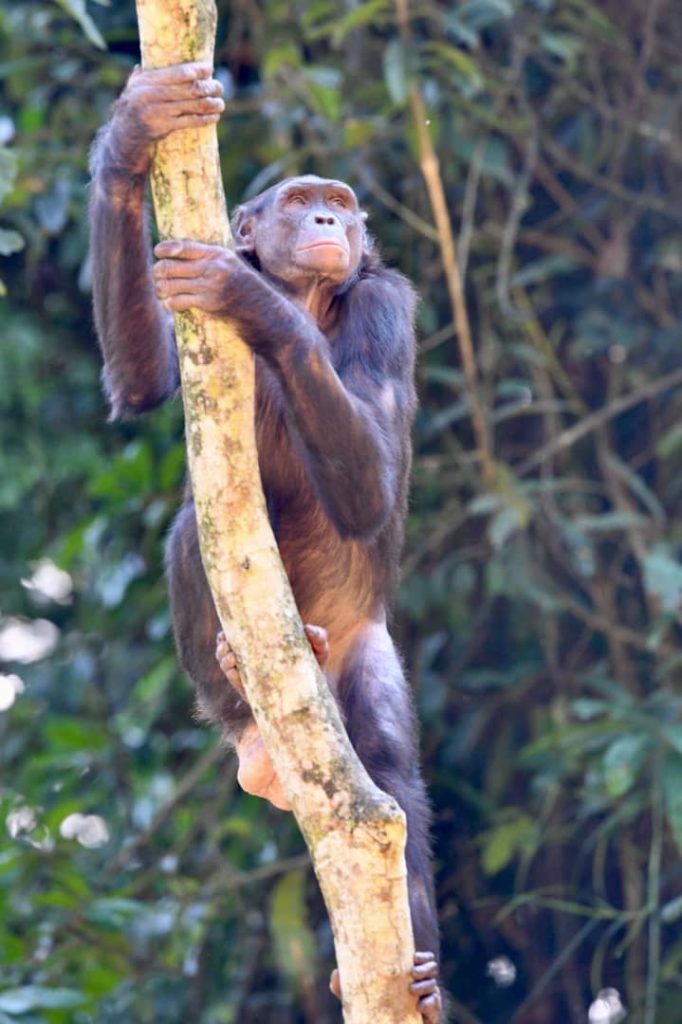
Friction of Shared Forests
Faced with the growing number of bonobos under care, the NGO Les Amis des Bonobos du Congo (ABC), which manages Lola ya Bonobo, initiated the creation of a community reserve called Ekolo ya Bonobo.
Located in the Basankusu territory in Equateur Province, this reserve covers nearly 200 km² and includes eight forest villages. Its goal is to reintroduce bonobos into their natural habitat, far from urban areas, to promote autonomy and long-term survival.
However, the implementation of this reserve has sparked tensions and disputes. “Local communities denounce the failure to respect initial agreements as well as restrictions on forest access,” says Trésor Bondjembo Itamba, a member of civil society in Kinshasa and a native of Basankusu.
He mentions the failure to respect agreed boundaries, the construction of a hospital that has not yet materialized, as well as schools. He also denounces arrests of community members who took part in a peaceful march in June 2023 to demand that these commitments be fulfilled.
For its part, the NGO ABC considers these allegations to be unfounded and plans to renew the management contract in 2025. During a meeting held in Basankusu from September 7 to 20, 2023, with local communities, the NGO acknowledged residents’ concerns and promised to meet the requirements outlined in the agreement. So far, however, no concrete action has been taken.
Most bonobos in the DRC live in Salonga National Park, where a joint study by the ICCN and IUCN estimated their population at 15,000 to 20,000 individuals between 2012 and 2022.
Between Hope and Uncertainty
Faced with multiple threats to bonobos in the Democratic Republic of the Congo, initiatives combining education, human coexistence, and legal protection are being deployed. “Education is the key to conservation,” emphasizes Claudine Andrea, the founder of the NGO Friends of Bonobos of Congo (ABC), who manages Lola ya Bonobo.
The NGO ABC has created Kindness Clubs in more than 40 schools around Kinshasa, raising awareness among over 570,000 children. Meanwhile, the Lola ya Bonobo sanctuary welcomes nearly 30,000 visitors each year to educate them about the central role humans play in protecting forests and primates.
Coexistence with local communities is a key pillar of the strategy. “Ekolo ya Bonobo is not a park, but a community reserve. Protecting bonobos also means protecting the people who share their environment,” stresses Suzy Nzuzi.
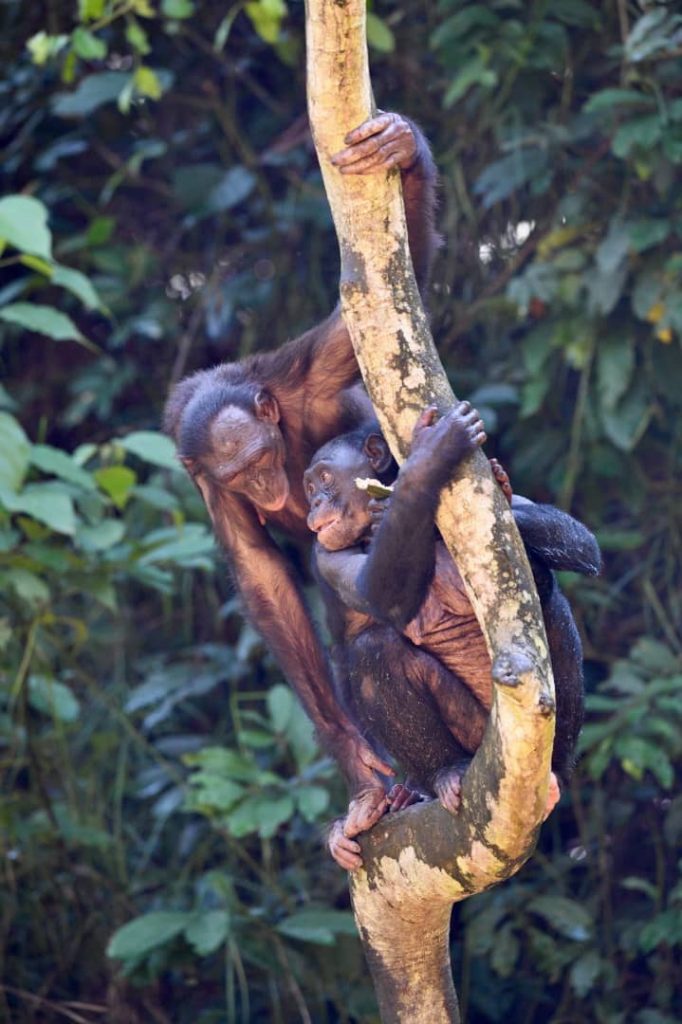
For Trésor Bondjembo, a civil society activist, the key lies in transparent and participatory governance: clearly defining responsibilities, strengthening legislation, and creating buffer zones for local residents.
The fight against poaching and health threats complements this integrated approach. Sanctuary teams monitor bonobo health, quarantine sick individuals, and collaborate with ICCN, the FARDC, and the Pan African Sanctuary Alliance (PASA) to secure protected areas and organize ex-situ conservation of rescued animals.
“Despite their closeness to humans, no cases of Ebola or COVID-19 have been detected among our bonobos,” reassures Suzy Nzuzi.
Thanks to this combination of education, local cooperation, and strengthened security, the Lola ya Bonobo sanctuary and the Ekolo ya Bonobo reserve offer a glimmer of hope for the survival of these unique, critically endangered primates.

