

By: Andrew R. Halloran, Ph.D., Founder and Lead Consultant, The Elgin Center
Editor’s Note: Andrew R. Halloran, Ph.D., is a primatologist, conservationist, and animal welfare specialist with over 25 years of experience working with chimpanzees in sanctuaries, zoos, and the wild. In writing this piece, Andrew hopes that by sharing the stories of chimpanzee sanctuaries, he can highlight chimps as the individuals they are, as well as showcasing the complexities of the science of providing good welfare to such an extraordinary species.
This is the first in a three-part series by Halloran, first published by the Arcus Foundation, intended to raise awareness about the individuality of chimpanzees and the importance of the complex work done by sanctuaries and rehabilitation centers to care for them. A French translation is also available. Read Part 2, Skippy’s story and Part 3, Leo and Hercules’ story.
In 2019, Chimpanzee Sanctuary Northwest‘s co-directors were sleeping quietly in the mountainous landscape of central Washington State when the early morning stillness was shattered by screams erupting from the chimpanzee holding area. They bolted upright, immediately recognizing the cry of alarm coming from the resident chimpanzees, and ran to see what had happened.
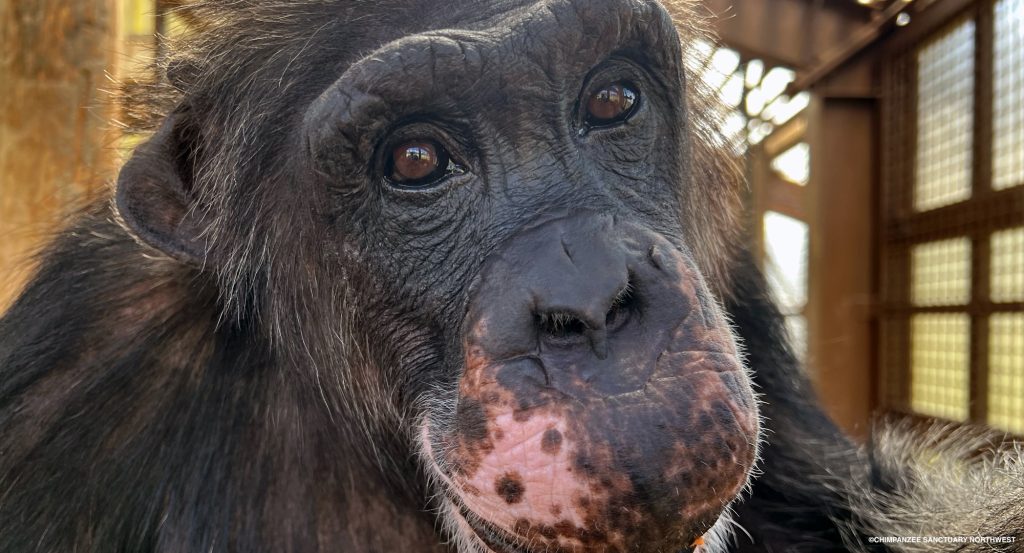
Inside, they saw Burrito, a 36-year-old chimpanzee, being pinned to the ground by three other chimpanzees. He was covered in blood, with lacerations lining his face and body. Although clinging to a shred of consciousness, he was unable to fight back. He lay motionless, despite his three attackers continuing to bite him relentlessly. All the while, the other chimpanzees screamed from their quarters, unsure of how to help Burrito.
The directors, Diana Goodrich and J.B. Mulcahy, managed to sequester the attacking chimps and rush Burrito to veterinary care, saving his life. But the real question remained: What had caused the provocation, and why had this small group of chimps turned on one of their own?
What Burrito’s past reveals about life in captivity
The introduction of rescued primates—such as former lab chimpanzees—to a new sanctuary is a slow and complex process. When a rescued chimp first arrives, caregivers spend weeks or even months learning about the chimp’s health, personality, and past experiences to decide which chimp group would be the best social fit. New chimps are introduced slowly, all while caretakers closely monitor interactions for signs of stress, aggression, or bonding. Only when benchmarks are met that show the group has coalesced does the newest member become integrated full-time into the established community.
This step-by-step process can take anywhere from a few weeks to several months, depending on how the chimp responds emotionally and socially. And while Burrito had undergone a similar process, to understand Burrito’s attack, we need to look at not only his history, but also the course of events that led to that awful moment, and how chimpanzee social integration can break down, even after years of living together in sanctuary.
Like most chimpanzees in sanctuaries, Burrito had been rescued from very poor living conditions. His early life was shaped by the absence of basic needs and essential care every chimpanzee requires. As a result, Burrito had a history of trauma commonly associated with the conditions he lived under for over 25 years.
Burrito was born in a laboratory in 1983. As was common with most laboratory chimpanzees in those days, he was likely taken from his mother soon after birth and hand-reared. When he was old enough, he was used in studies to test the efficacy of hepatitis vaccines. As an adult, he ended up in a holding facility that leased chimpanzees out to laboratory or entertainment outfits that needed them. As with all chimpanzees at this facility, he lived without windows and with very limited companionship.
Born into these conditions, Burrito was thrown into a world far removed from the one he was meant for, one filled with rich social groups, foraging in forest habitats, and playing with family and friends. Burrito wasn’t raised by his mother. Burrito didn’t have a social group that would protect him, help him find food, or teach him how to survive in a natural chimpanzee habitat. Burrito never interacted with a family of infants, juveniles, alpha leaders, elders, and troublemakers. Burrito would never know lifelong friends or lifelong enemies. He would never experience traversing across a large home range in an African forest. Burrito would never have to defend a core range. There were no natural predators in Burrito’s world. There were no watering holes, no fig trees, no small animals to hunt, no new fruits to stumble upon, no traditions or culture to learn from community members. In short, Burrito would never know the world that he was meant, by nature, to know and live in.
Now, decades later, Burrito’s early experiences—just as with humans—are still very much a part of him. Every one of Burrito’s interactions is influenced by his past experiences. It is present in each movement, in each vocalization, in each scream. It is present in whatever chain of events that led to his current predicament. Even as he lies pinned down on the floor being bitten, it is another experience, another event that shapes him and his future interactions.
From laboratory to sanctuary: Giving Burrito a second chance
Before arriving at the sanctuary, and after his time in hepatitis research, Burrito was leased to a roadside zoo in Florida—one of many unregulated facilities where chimpanzees suffer in captivity. Burrito lived in a small corn crib cage with other chimpanzees who were trained to walk on tightropes, use stilts, and wear clothes.
Years later, Burrito was sent to a breeding facility. He was once again in a familiar, old, windowless cage with the threat of being leased out to another laboratory or entertainment venue always imminent. In his small social group, he was frequently injured by the other chimpanzees.
By the mid-2000s, chimpanzee research had fallen out of favor. Funding for such studies was disappearing. Laboratories faced increased public scrutiny. They also had to deal with the expense and logistics of housing and handling an incredibly complex, unpredictable, and dangerous species. As a result, research holding facilities began looking for options to disperse their chimpanzee population. Some went to laboratories that were still active in chimpanzee research. Others went to sanctuaries. Luckily, Burrito was one of these.
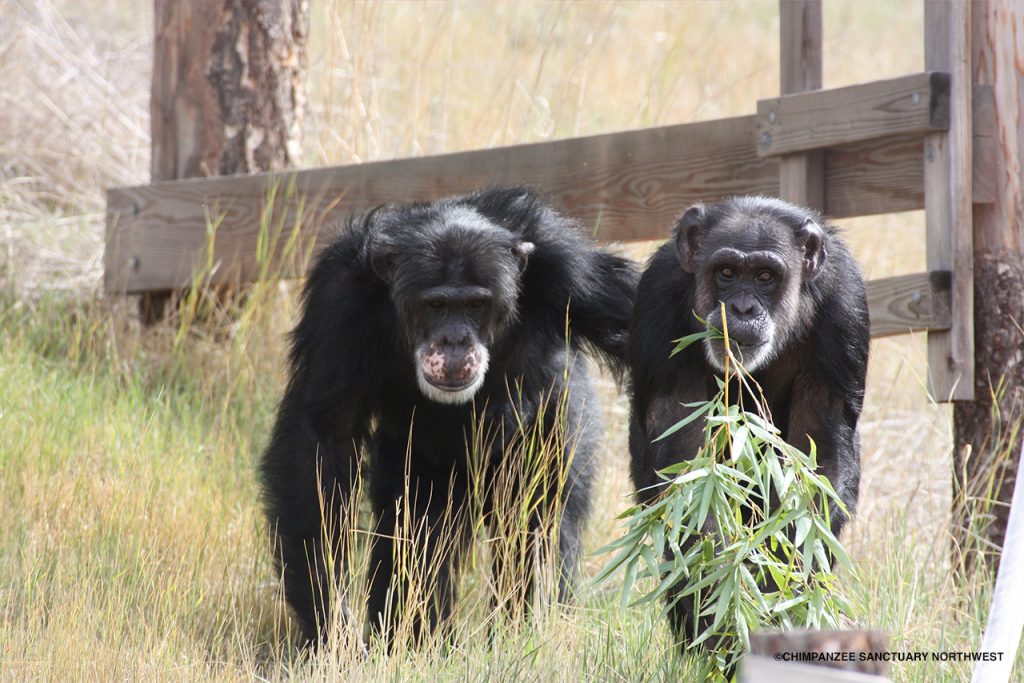
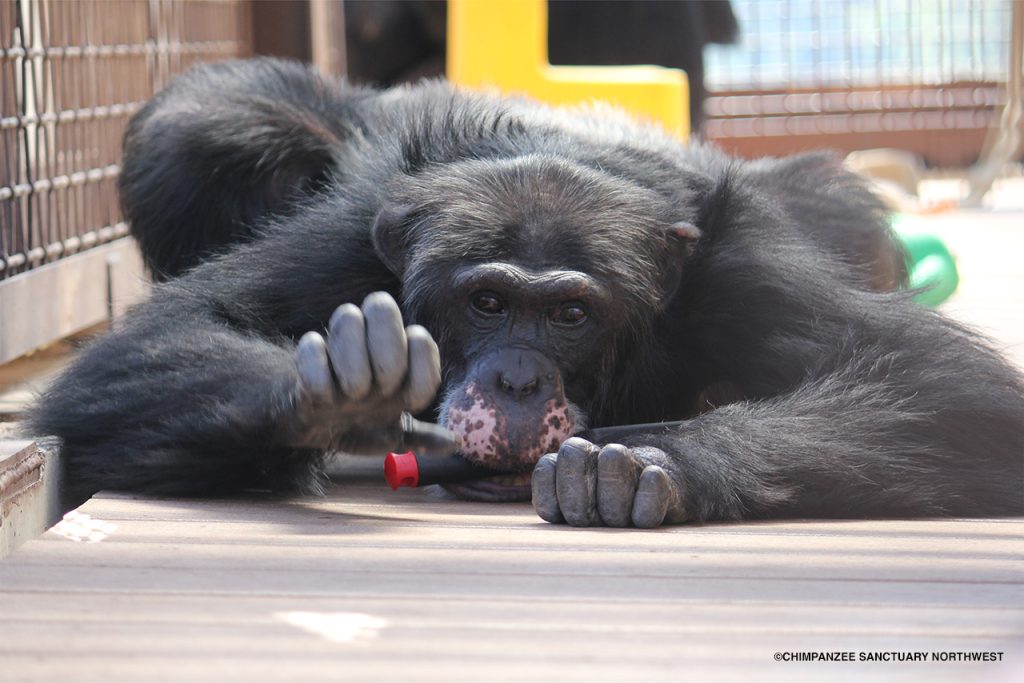
In 2008, Burrito found a permanent home at Chimpanzee Sanctuary Northwest, a sanctuary for rescued chimpanzees in Washington State, which is one of several Global Federation of Animal Sanctuaries (GFAS)-accredited sanctuaries in the U.S. providing safe, loving, long-term homes for former lab chimps alongside Black Beauty Ranch, Center for Great Apes, Chimp Haven, Fauna Foundation, Project Chimps, and Save the Chimps.
The journey continues: Why sanctuary arrival isn’t the end of the story
Oftentimes, this is where these stories end. We have a happy ending. Everything has turned out okay for little Burrito. But sometimes this can be just the beginning of an extremely challenging journey.
First, sanctuaries house a large number of chimpanzees (many of whom come from trauma-filled backgrounds) who have been exploited for human use and denied basic needs and essential care for years. Second, they are tasked with finding a way for these traumatized individuals to thrive as chimpanzees through specialized sanctuary care and rehabilitation. Even with the most careful of planning, introductions can go wrong: oftentimes without warning and oftentimes days, weeks, or months after a group is formed. Injuries like Burrito’s are not uncommon in the sanctuary world. In fact, many times, the injuries can be far more severe.
Yet, despite the risk, staff at chimpanzee sanctuaries are tasked with providing a life where chimpanzees can thrive. Each day, they are faced with choices on how to best provide the means for chimps in their care to live life to their fullest potential—all while meeting the specific needs of every individual, who has unique history, risks, and barriers to thriving.
What does it mean to thrive as a chimpanzee?
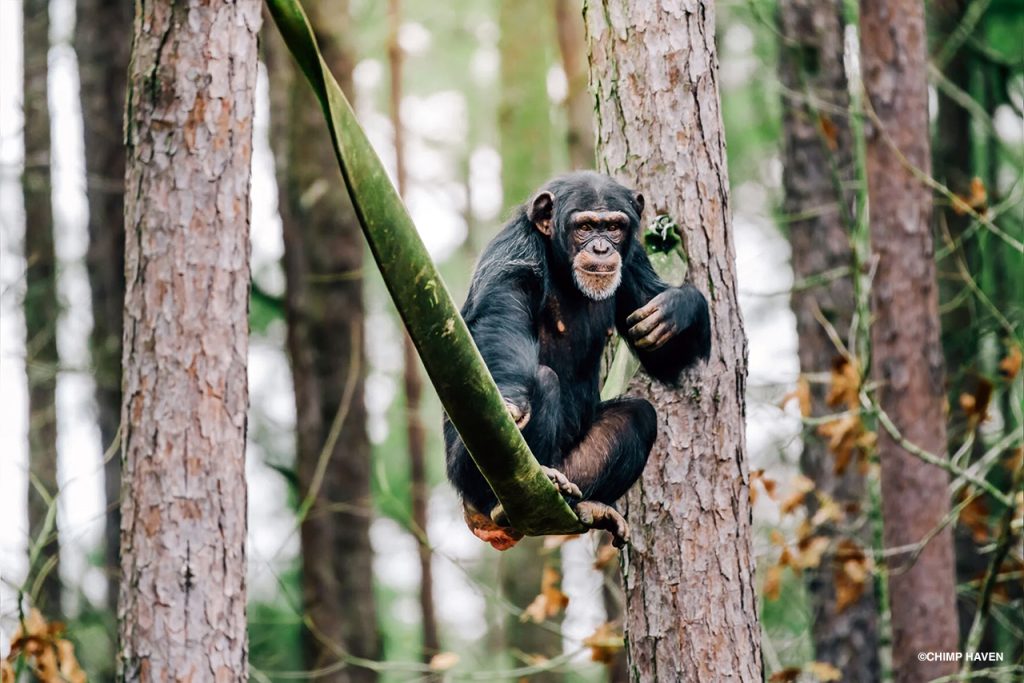
A meaningful life for a chimpanzee has many parallels to a meaningful life for a human. It includes having the freedom of choice and the ability to determine the course of their experiences. Humans, for the most part, can choose where we go, who we interact with, what we eat, and much of what we experience. Chimpanzees, being similarly self-aware, need the same things to experience positive welfare.
It also means the ability to live in a rich social environment. Like humans, chimpanzees survive in social groups that provide protection, connection, and skills. Experiencing the world as a chimpanzee means being with other chimpanzees in a safe, stable social group. They learn how to survive the world around them through interacting with each other. They protect each other, nurture each other, and help each other in many, many ways.
Finally, it means the ability to live in a cognitively stimulating environment. Like humans, chimpanzees are highly curious and need to explore their surroundings. In nature, they survive through exploration. Much of their day is spent foraging for food or figuring out novel ways to obtain resources. This makes chimpanzees remarkably adaptable to even a harsh environment.
Sanctuaries must find ways to provide these critical elements to chimpanzees who, by and large, have been deprived of them throughout their history. It is massively complicated and challenging to provide socialization, self-determination, and cognitive stimulation (all key components of positive welfare in sanctuary settings) to a chimpanzee like Burrito, who has lived without these for his entire life. As Burrito is being stitched back together, this challenge is evident and relevant to all who take care of him.
New introductions come with risks at chimpanzee sanctuaries
A decade after Burrito arrived at Chimpanzee Sanctuary Northwest, the sanctuary received other chimpanzees. Naturally, the acquisition required social introductions. These were done with careful planning, taking the social rank and personality of each individual into account. At first, the introductions went well. Then Burrito was added. Despite some injuries, none were significant enough to warrant stopping the introductions.
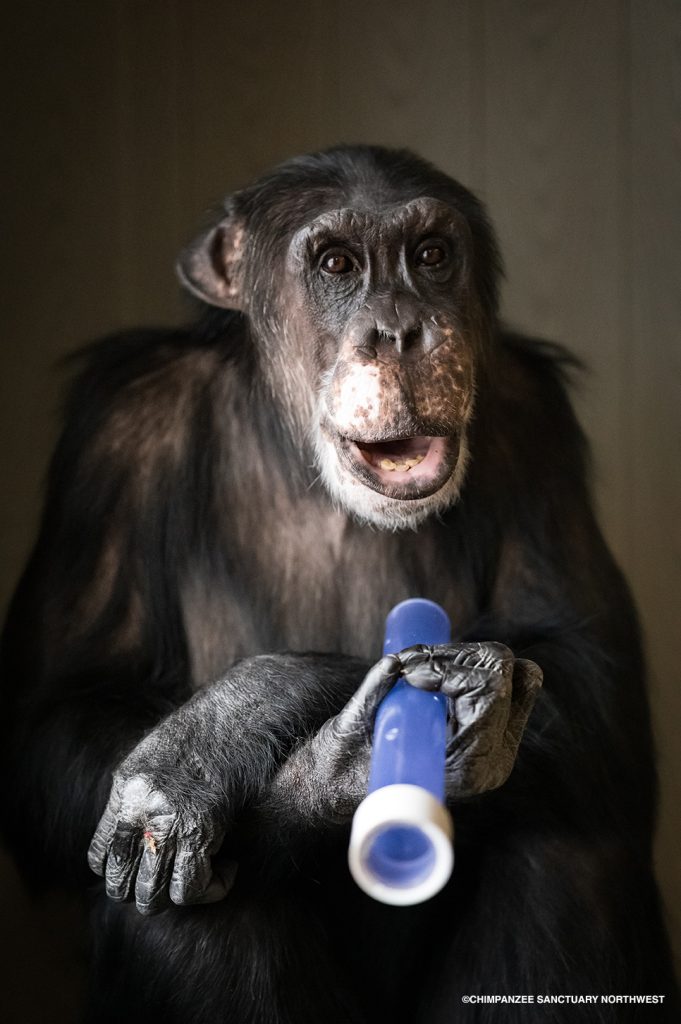
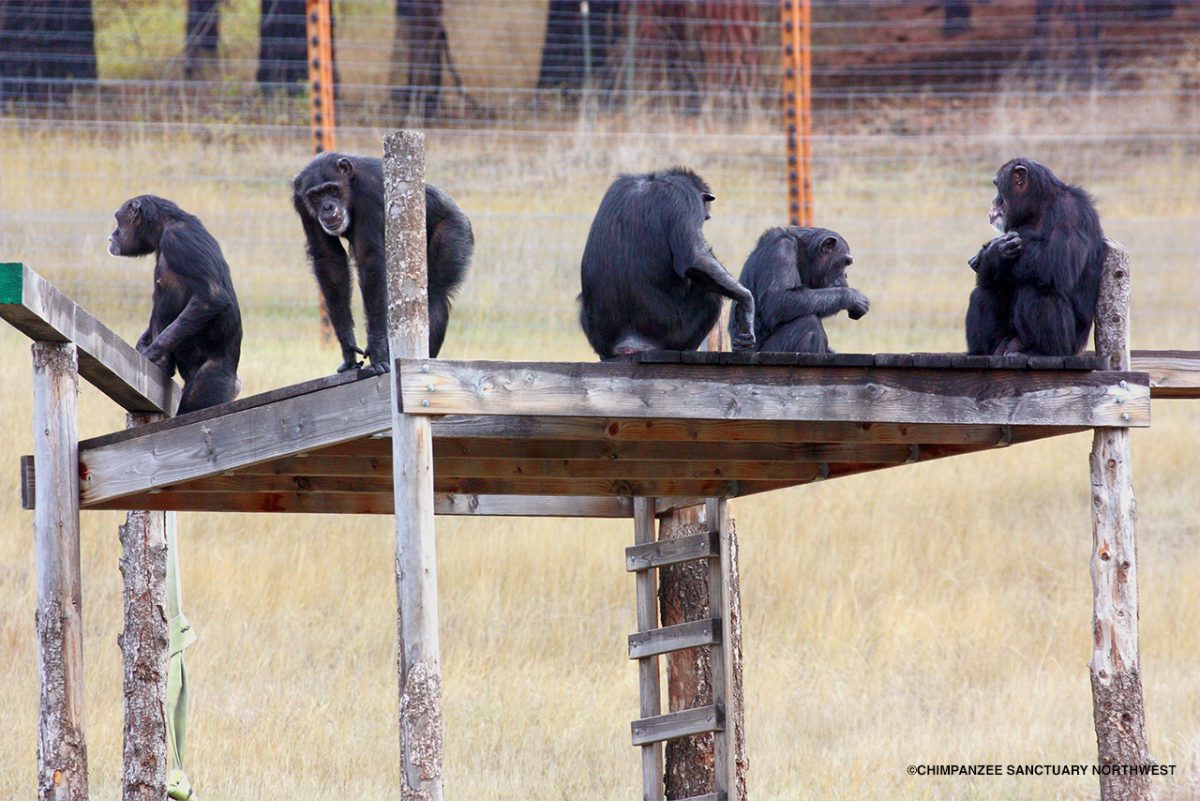
But weeks after the introductions began, the attack on Burrito occurred without warning. Fortunately, Burrito fully recovered and new social configurations were figured out. Now, Burrito lives happily in a large group with other chimpanzees. His behavior has changed, showing that he learned from his experience and knows more about interacting with other chimpanzees. He enjoys an enormous habitat with trees, climbing structures, and a view of the valley below him. He chooses where he goes. He chooses who he interacts with. He enjoys the enrichment that stimulates his cognitive abilities, allowing him to solve puzzles and explore.
Sanctuaries do more than offer a safe home. They help formerly captive chimpanzees reclaim agency, explore natural behaviors, and heal from trauma. They provide spaces where a chimpanzee like Burrito can receive the care he needs to overcome his obstacles and thrive. This is never an easy task. It is challenging and fraught with times of great stress for both the chimpanzees and their human caretakers. Burrito will never get to roam an African forest or defend a core range from another group of chimpanzees. But he can live in a place where the unique needs of a chimpanzee are met by dedicated staff who believe that all chimpanzees deserve to thrive, no matter where they are.

